luigi

jeanne and louis, early 60s

There they are: my late parents, lovely Jeanne and handsome Louis. He was 16 years her senior, 56 when I was born in 1963. Nowadays, not such a strange thing, to see an older parent at a school concert or a playground. Back then, it was peculiar enough that the news of my birth was met with amused relief by his assorted man-friends. “Hey, Lou!” they said, or so my mother reported to me many years later. “Good thing it’s a girl! Otherwise, you’d be out there throwing around a baseball in your 60s! Har har har!!”

To which I say: Har. Har. Har. Guess WHAT, knuckle-dragging sexists of the Neolithic? My father was out there throwing around a baseball in his 60s ANYWAY! In fact, he did that into his 70s! So there! Bronx cheer! Pppplllllllll!

But they didn’t know any better, really. Times were different. Sex roles were different. Fathers were different.

My father — Daddy, I called him — was a classical music critic and an author, co-author, editor or co-editor of a baker’s dozen of books. He was brilliant. He studied, read and spoke 16 languages, several fluently.

The eldest son of Italian immigrants, he embraced learning early on as a path to enlightenment and never abandoned it. He worshiped Beethoven, my mother and Thomas Hardy. He wore a beret morning, noon and night. He ate crystal blue mints and prunes, although not together. As a young man in Little Italy he sparred with his pal Big Lou Barba, but then Barba went punch-drunk and Daddy swore off prizefighting and violence forever. The only thing I ever saw him hit was a small bag at the back of our L-shaped porch in Connecticut, and when he did, our house rattled like the wrath of God.

He was a charismatic man. A sweet man. A terrible, terrible punster. (“I’m going for the mail.” Pause. “But not the female.” And he’d say this every single time he went to the mailbox.) He was a surprising man, too, offering to yield his patronymic to the matronymic because he thought “Mitchell” might be an easier name for his daughters to bear through life than “Biancolli.”

He was charming man; he once talked a mugger out of stealing his wallet (“Do you really want to? My late mother gave me that!”). He was a brave man; on the subway, he stopped a knife fight by laying his hands on the young men’s shoulders and saying, “brothers, brothers.”

He played the piano and the accordion by ear. His favorite song was “Melancholy Baby,” and he loved to belt it out in English and Neapolitan, his first language. He sang it for everyone who’d listen, including the friends and strangers he encountered on his walks around Lake Waramaug — walks he took every day, well into his 80s, long after his memory up and left him and everyone became a stranger, everyone became a friend. And as he walked, he swirled his arms, pumping out his Swedish calisthenics to a silent beat.

When he died, at the age of 85 in 1992, I imagined him as a young man — the young man I never met, strapping and sharp. I never knew that father. I never tossed a ball with that one. Sometimes, as a kid, I wondered what it might be like to have a conventional dad, one who still worked, who hadn’t struggled with depression and dementia, who wasn’t so often mistaken for my grampa.

But the one I had did his best. The one I had loved me, knew me, thought the world of me. The one I had smiled when I asked, “Daddy, can we play catch?” Even better, he said yes.

why we moon

When my sister Lucy and I were little, around 6 and 3 or thereabouts, we used to moon people. I have no idea where the inspiration for this came from, but we got it from somewhere (this was, after all, the late 1960s), and we exercised this vaguely inspired right to moon on our front lawn in New Preston, Conn., for all the world to see. Or maybe not all the world; maybe just passing cars.

At the time I never wondered what the drivers and passengers of these vehicles might have thought, tooling around Lake Waramaug on their leisurely summer drives, approaching this fairly standard-looking white colonial with its fairly standard-looking lawn. Or it might have been standard-looking, had my parents mowed the bottom half of it — they kept the grass high to prevent their darling children from rolling their tricycles into the road, so it looked perpetually unshaved, like Yasser Arafat, Josh Groban or a goat — and had these same parents prevented these same darling children from bending over and dropping trou for unsuspecting tourists.

But they didn’t know, and they didn’t prevent us, and so we had our fun. It consisted of this:

(Inside)
Lucy: Let’s go outside!
Me: Okay!

(Outside)
Lucy: Let’s wait for cars!
Me: Okay!

(A car rounds the bend)
Lucy: Let’s drop our pants and shake our butts!
Me: Okay!

(Dropping our pants and shaking our butts)
Lucy: Ha ha ha ha ha!
Me: Ha ha ha ha ha!

Sometimes, for even more fun, we would perform this dropping of the pants and shaking of the butts while chanting DAY, D-D-DAY, D-D-DAY, and don’t ask why because I don’t remember.

At this point, cough cough, I would like to assure people that I have not mooned anyone since, neither in Connecticut nor Albany nor anywhere else I’ve lived, on any other lawn, be it standard- or non-standard-looking, mowed or unmowed. I do wonder, however, whether my urge to write memoirs and blog about personal matters — such as, for instance, my childhood de-pantsing habits — themselves classify as a sort of mooning, a way of saying, LOOKIE HERE, PEOPLE! I HAVE ALL SORTS OF HIGHLY PERSONAL BID-NESS TO SHOW YOU!! I DARE YOU TO LOOK!

So, really, I can roll my eyes all I want at instances of dumbass celebrity mooning (Justin Bieber instagrammed his lustrous pop-god tushy just a few days ago), but I’m not sure that what I’m doing is all that different. To moon is to show your hidden self to the world — to seek attention, tempt rejection, find acceptance, and maybe engage in a little defensive mockery, just in case. Because you never know, until you stick it out and shake it, how your rear will be received.

Day, D-D-Day, D-D-Day.

a fresh layer of joy

photo (21)

the awesome wedding cake topper (designed by the awesome bride)

Last night, on what would have been Chris’s 58th birthday, our youngest nephew married his sweetheart. They made their promises, swapped their rings, danced to a Randy Newman song under swirling disco lights, laughed and kissed and beamed before a ballroom full of people awed by love.

A fresh blanket of joy now lies across a date so thickly layered with gratitude and grief. I thank heaven Chris was born. I wish to that same heaven he hadn’t died. It’s that simple. That complicated. But a new thickness now overlays the older, crustier strata, and it’s softer than the others. It warms me. Watching my nephew and his new wife work the room, flushed from love and dancing, reminded me — all of us, at this and every wedding — that yes, life surprises and prevails, and no, we’re not delusional to believe in it. We’re only human.

Or would you prefer a more edible metaphor? Layers of creamy wedding goodness, a sweet fluff of bliss to top them all? Oh, why not. I’ll bite. Pass the cake.

let’s talk about mental illness, really

Happy Lou, long after the storm.

Happy Lou, long after the storm.

On the horn with Madeleine recently, she asked me: “Mom, did you read Nicholas Kristof?” This is a question that she often asks and always makes me happy. That my 20-year-old daughter reads The New York Times and keeps such close tabs on her favorite columnists warms the cockles of my newswoman’s heart, whatever the heck cockles are. (And are they normally that cold?)

Turned out Kristof’s column a couple Sundays back raised an issue that cuts close to home for us. He called on the news media to stop neglecting mental illness — to address it honestly, compassionately and comprehensively, looking at real people who struggle with depression or eating disorders or suicidality or P.T.S.D., rather than weighing in with generalizations after the latest mass shooting. “All across America and the world, families struggle with these issues,” he wrote, “but people are more likely to cry quietly in bed than speak out.”

No one likes to talk about mental illness. The thought alone unsettles, embarrasses, terrifies. After my father attempted suicide with sleeping pills in 1974, he spent nine days in a coma and six months undergoing pure talk therapy at the Institute of Living in Hartford, Conn. — which worked — and I spent those same six months not answering the unspoken questions of everyone at school. One kid who dared mention my daddy’s stay in a psych hospital got promptly shushed by a teacher. And I remember thinking, more or less, “What the fuh?” The message was clear: This type of illness, with this type of hospital stay, is not to be discussed.

Bullshit. We need to talk about it. It hits people.

My father recovered from his depression and went on to live another 18 years — no psych meds, no recurrence, though the coma probably hastened his dementia. My sister and husband weren’t as lucky. I’ve now written about all three of them (two in my last memoir, one in my next one), so I’ve obviously overcome any lingering reluctance to discuss suicide in a public forum.

It’s all out there; I’m all in. I don’t have much choice in the matter. Because, face it, if I decided I couldn’t talk about the people in my life who’ve been affected by mental illness, I WOULD HAVE VERY FEW THINGS TO TALK ABOUT.

As a people, 21st-century Americans are open to discussing so many things: our sex lives, our hoarding, our fights against life-threatening ailments. But when we try to discuss this brand of fight and this brand of ailment, our jaws lock. We can’t go there — not because it’s all too alien. Because it’s all too familiar. Because too many of us have cried quietly in bed ourselves, or have heard a loved one’s weeping.

There’s no cause for shame in mental illness, no cause to feel isolated. We only think we’re alone because we’re so tight-lipped, so scared. Every time I’ve lost a beloved someone to suicide, people have emerged from the shadows to confess that they had, too.

How can we combat this scourge if we don’t face the darkness squarely? How better to nurture and bulwark our own peace of mind than to name the insanity, call it out, give it form, understand it, find its weakness, see its depths? How better to stay sane and alive ourselves — which are, in the end, one and the same thing?

So let’s talk about it. Really. And let’s start now.


beautiful-mamaHere I present one of the most beautiful images I own: an early, glorious, glamour shot of my late mother, Jeanne Frances Mitchell Biancolli. Mama for short.

I could write a book about this woman. Maybe someday I will; I already devoted a sizable wedge of paper to her in my last wild stab at memoirizing, “House of Holy Fools.” I also wrote about her, and my second mother, Pat, in a Times Union column last summer

As you can see, she was a knockout. What you can’t see is the blueness of her eyes, the outrageousness of her wit, the flintiness of her spirit, the wiriness of her arms or the roughness of her left hand’s fingertips, which were calloused from many hard hours of practicing the violin. Those callouses said it all for me. They said: Beauty makes demands on us. It hurts. It toughens us, but in a good way, a necessary way. Sometimes, in the creation of music and the living of life, we grow new layers of skin.

Mama was a world-class concert violinist who performed six times in Carnegie Hall, toured South America and Scandinavia, soloed with the Philly under Ormandy — while drawing raves for her musicianship and wolf whistles for her looks. My father Louis, a music critic for the New York World-Telegram, reviewed her and loved her playing long before he loved her, too.

When she played, all that she was came out in her violin: Her music was an aural blast of authenticity, clarity, intellect, deep human insight and ferocious emotional might. She always said exactly what she knew to be true, in words and music; her phrasing was apt and efficient, whether nailing rubato in a hunk of Brahms or flattening me with straight talk when I was mooning over a boy. (“He’s pretty, I take it.” Quarter-beat rest. “Just be sure you’re not thinking with your gonads.”)

This directness drove me nuts, sometimes. When I was a teenager, more than sometimes. I now recognize it as Mama’s single greatest beauty, a source of strength and balance in a house so often cluttered and listing. But not when she played the violin, or my sister the piano. Not when we laughed. Not when she cut through all of it with her piercing, uncompromising, fearless mind. That was as clear as her eyes, as sinewy as her arms, as powerful as her music.

launching exclamation points . . . now!

sample 2B
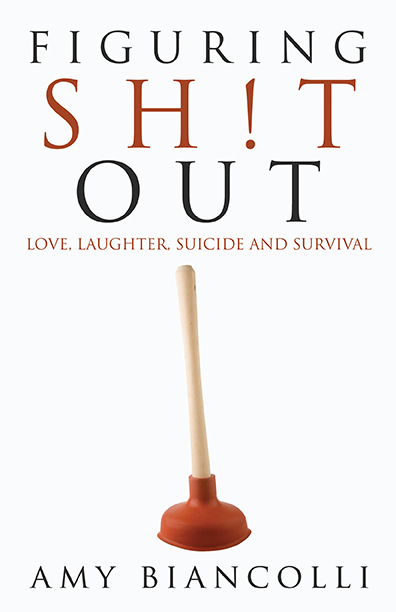
I have a publisher! Behler Publications, outside Pittsburgh! That really happened! And not only do I have a publisher, I have a cover! That happened, too! I know, I can’t believe it, either!

And not only that, both the publisher and the cover happened within less than a week. Four days, actually. About the time it takes to fly to New Zealand and back, which I’ve never done but would like to, someday, although I’d prefer time to chillax between the the two days there and the two days back.

When I told my dad (meaning Dan, my current father, as opposed to Louis, his late predecessor), he let out a celebratory whoop before reminding me that not so long ago I’d called him up at a low ebb and announced, flat-out, in the grating, nasally monotone of a woman who has gazed so far inside her navel she got her face stuck, that the book would never find a publisher. Ever.

“Remember what you said?” he asked me. “You said you were stupid for even believing it could happen.”

I know, I said. I remember.

“And remember, I said you were being an asshole.”

I remember that, too.

He smiled. He gives me such vast amounts of shit, and the more he gives me, the more I love him.

Even at that nadir, I was glad I’d written the book. Writing it was a gift. Writing it was restorative and transformative, profoundly so. I became someone new as I wrote it: freer of worry, fouler of mouth. Having lost my sister Lucy to suicide in 1992, I knew about grief in the aftermath, but I knew squat about losing a spouse and raising three kids alone. After Chris’s suicide in 2011, I was forced to reconfigure myself, suddenly and dramatically, in ways I could never have imagined. I still can’t imagine them all.

So the book has found a home. It’s due for publication this fall. And for the record: that classic rubbery plumbing device on the cover came straight from the fertile mind of my daughter Madeleine. We were plowing through Indian takeout, and between bites of chana saag, she said, “Mom. They should put a plunger on the cover!”

They should and they did. That really happened, too.

facing the slope

photo (14)
“Ames,” says my brother Danny, somewhere near the windy top of Killington. “I want you to ski this black diamond with moguls. I’ll show you how to do it. You’ll be fine.”

You want to me to ski a black diamond with moguls, I repeat back. You’ll show me how to do it. I’ll be fine.

“You’ll be fine.”

Ummm.

It’s around 3:30 Saturday afternoon, we’ve been skiing all day on sucky icy lumpy conditions, and I’m wrecked. Every joint and muscle and piece of bone in my body hurts, including the tips of my pinkies. A few hours earlier I wiped out trying to turn on a lump of wet, ungroomed crap passing for snow, so I’m not in the best shape for any kind of black diamond, be it accessorized with moguls or not.

But Danny’s insistent. And he’s smiling. And he’s my brother. And I haven’t died so far today, so I’m on a streak of good fortune. Continue reading

the expanding universe

This Christmas, as usual, my kids and I joined Chris’s family for a day of eating and laughing followed by yet more eating and yet more laughing, with breaks in between for energetic gift-giving and weak passes at digestion. While he was alive, I considered them the best in-laws anyone could ask for: caring, attentive, generous, never intrusive, always warm. After he died, they conveyed to me, in gestures and words, that my husband’s death was not an end to my bond with his family. In the midst of all that hurt, I was profoundly grateful to realize that I hadn’t lost them, too.

My universe can’t shrink any more than it has to. I want it to expand. And strangely, despite all the losses, it continues to. This is how it functions. This is its inclination, flinging outward from a central moment — the Big Bang, or the moment of creation, or whatever you want to call the giant cosmic spewing that kicked it (and us) into gear.

I happen to believe that a Someone set it off, but even if I didn’t, I’d still take comfort in the knowledge that, no matter what interplanetary flotsam we encounter, we’re forever moving forward. Even when our lives contract so grievously after a loss, they’re still expanding. Even when we seem to have derailed entirely, skidding off toward some forbidding landscape, we’re still going somewhere. Old relationships deepen and change. New friendships form. New family arrives in unexpected and miraculous ways.

It was Chris who remarked, “Amy, for someone whose family is dead, you have a lot of relatives.” He made this remark about 15 years ago, but I’ve recalled it often these past two, whenever I found myself in the welcoming embrace of his siblings, their spouses, their sons. Soon we’ll be seeing my extended and splendiferous non-blood family, the loved ones I acquired as a kid. How my universe expanded when I met them. How it expanded again when I married Chris.

And now, two of his nephews — my nephews — are getting married. I would say their fiancees are about to become members of the family, but they already are. They’re already eating and laughing and gift-giving. It was some of their food I went on to digest last night; if baked s’more cookies and lemon bars can’t seal the deal, nothing will. As the universe expands, so does my stomach.

term of the day: “shit magnet”

SHIT MAGNET (noun) ˈshit ˈmag-nət. One who attracts shit, any kind of shit, be it death, woe, romantic break-ups, legal tangles, financial or medical catastrophe, accidentally lighting your hair on fire or other grave misfortune, especially any that results in the production and propulsion of large amounts of snot. Synonyms: punching bag; hopeless wreck; gnasher of teeth. Origin: Randy.

Yes, this is Randy’s term. He gets the credit. He reminded me of it in his response to my post about getting swiped and subsequently swooped-upon by the TSA, and I’ve been meaning to give it a full airing. In case you’re wondering who Randy is, and you should be, he’s a kind, funny man, and he’s my brother, and he’s been that way for a couple of decades now. My brother, that is. Not kind and funny; he’s been that way since birth, at least I assume so, because I didn’t actually cross paths with him until I was, like, 14, and he was, like, 13. His dad was headmaster of Wykeham Rise, that itsy-bitsy arts school where my mom taught music.

Randy and I met one afternoon when he was out in the  Wykeham parking lot, kicking the soccer ball around, and he said Hey, and I said Hey, and he said Do you play soccer, and I said Guess so, and he kicked the ball to me and I kicked it back and the freaking thing slammed straight into the Latin teacher’s car so hard that it made a dent in the door. Thank heavens it popped straight back, although the Latin teacher, a diminutive Hungarian eccentric we called Doc, was the worst and most oblivious driver of all time and probably wouldn’t have noticed a dent in his car the size of, you know, the car.

So began my friendship with Randy, who went on to utter phrases of startling pithiness and discernment well beyond Do you play soccer. I will probably quote him again sometime. Several years back he coined the phrase above, hypothesizing that some people exert a fecal attraction more powerfully than others.

My own sense is that everyone’s a shit magnet of one sort or another; it’s just that not everyone talks about it. Seriously: do you know anyone who hasn’t been dealt some monumentally awful hand at some point? Maybe several points? Even that jerk who cut me off in traffic the other day, prompting spasms in my middle finger, is likely carrying around his own sack of pain. And if he isn’t, he will someday. The shit flies in all directions, just not at the same time. 

We take our turns as shit magnets, I believe. I’ve had mine. Randy’s had his. Someone else is next. Tell me, then, that this isn’t the most fitting synonym of all: human being.

‘good afternoon, wicked thighs’

photo (1)

Tracking back my blessings on Friday got me thinking about Wykeham Rise, the wee girls’ arts school in Washington, Conn., where my mom taught music and I learned to make pinch pots while singing “Caro mio ben” (although not simultaneously) when I wasn’t combing my hair at oblique angles and squinting through my bangs. Now closed, Wykeham had about 85 kids, tops. Most everyone was an artist or musician or actor of some sort, and those who weren’t might as well have been, because we were all so gloriously and floridly eccentric.

I loved that place. No one cared that I was a nerdy introvert with clanging dental hardware; I was a Wykeham Chickham as much as anyone, and before long, nurtured and valued at a school where my voice seemed to matter, where people seemed to care, I became less introverted. Though no less nerdy. And still prone to squinting. And, for the record, a space. 

The teachers at Wykeham were as eccentric as the kids.  One of them, a Mr. David I Forgot His Last Name, sketched the portrait above.  I was being spacey at the time. He felt Continue reading