beautiful-mamaHere I present one of the most beautiful images I own: an early, glorious, glamour shot of my late mother, Jeanne Frances Mitchell Biancolli. Mama for short.

I could write a book about this woman. Maybe someday I will; I already devoted a sizable wedge of paper to her in my last wild stab at memoirizing, “House of Holy Fools.” I also wrote about her, and my second mother, Pat, in a Times Union column last summer

As you can see, she was a knockout. What you can’t see is the blueness of her eyes, the outrageousness of her wit, the flintiness of her spirit, the wiriness of her arms or the roughness of her left hand’s fingertips, which were calloused from many hard hours of practicing the violin. Those callouses said it all for me. They said: Beauty makes demands on us. It hurts. It toughens us, but in a good way, a necessary way. Sometimes, in the creation of music and the living of life, we grow new layers of skin.

Mama was a world-class concert violinist who performed six times in Carnegie Hall, toured South America and Scandinavia, soloed with the Philly under Ormandy — while drawing raves for her musicianship and wolf whistles for her looks. My father Louis, a music critic for the New York World-Telegram, reviewed her and loved her playing long before he loved her, too.

When she played, all that she was came out in her violin: Her music was an aural blast of authenticity, clarity, intellect, deep human insight and ferocious emotional might. She always said exactly what she knew to be true, in words and music; her phrasing was apt and efficient, whether nailing rubato in a hunk of Brahms or flattening me with straight talk when I was mooning over a boy. (“He’s pretty, I take it.” Quarter-beat rest. “Just be sure you’re not thinking with your gonads.”)

This directness drove me nuts, sometimes. When I was a teenager, more than sometimes. I now recognize it as Mama’s single greatest beauty, a source of strength and balance in a house so often cluttered and listing. But not when she played the violin, or my sister the piano. Not when we laughed. Not when she cut through all of it with her piercing, uncompromising, fearless mind. That was as clear as her eyes, as sinewy as her arms, as powerful as her music.

don’t you take that tone with me

photo (18)

Yum.

So over the weekend I was cleaning out my fridge — BEFORE it started to smell like a landfill — and found, way, way, way at the back, hiding out like a poor, lost, fuzzy child, or maybe a fugitive from justice who’s been on the lam from Albany County Sheriff deputies for 87 years, the above advanced mold formation.

And when I say “advanced,” I mean it probably talks. In all likelihood it holds a Ph.D in some obscure academic discipline, like the history of peanut farming or Indoeuropean ethnohistoriographic geomorphology. If I asked it how long it had been in the fridge, it would respond, “Umm, twelve weeks, maybe?” and then add, “No, no, more like six months, it was before I grew the beard” before snapping, “Why the hell do YOU care, anyway? It’s kind of late to ask!” I would then turn defensive, saying I’ve only owned this particular fridge since late November, so Professor Snotty Fungus couldn’t be more than six weeks old, seven tops, at which point the mold would roll its eyes and say, “Whatever.”

At first, after liberating this sentient being from the back of my fridge, I wondered what form it had taken in its larval stage — i.e., when it might have been defined as “food.” I tried staring at it really close, but not too close, 1) because I’m far-sighted, and as I bent over my reading glasses slid down my nose into the fuzzy part, which, by the way, was wet; and 2) because it kind of scared me.

Then I recognized it. Do you? If you don’t, I don’t blame you; it looks more like Rip Van Winkle’s deformed lost twin, the one that got half-absorbed into the placenta before being born, than something that might in an earlier era have been consumed by anything other the occupant of John Hurt’s chest in “Alien.” Speaking of aliens, it rather resembles those flying neural boogers that sting Spock in the back in that old episode of “Star Trek,” doesn’t it?

Otherwise, I’m not going to say what it is. If you’re not too grossed out to give it a close look, you can guess.

launching exclamation points . . . now!

sample 2B
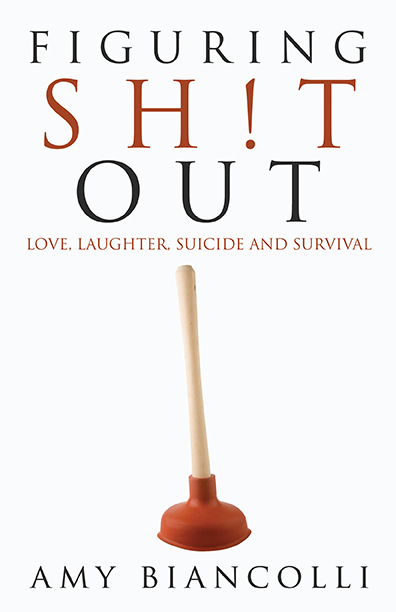
I have a publisher! Behler Publications, outside Pittsburgh! That really happened! And not only do I have a publisher, I have a cover! That happened, too! I know, I can’t believe it, either!

And not only that, both the publisher and the cover happened within less than a week. Four days, actually. About the time it takes to fly to New Zealand and back, which I’ve never done but would like to, someday, although I’d prefer time to chillax between the the two days there and the two days back.

When I told my dad (meaning Dan, my current father, as opposed to Louis, his late predecessor), he let out a celebratory whoop before reminding me that not so long ago I’d called him up at a low ebb and announced, flat-out, in the grating, nasally monotone of a woman who has gazed so far inside her navel she got her face stuck, that the book would never find a publisher. Ever.

“Remember what you said?” he asked me. “You said you were stupid for even believing it could happen.”

I know, I said. I remember.

“And remember, I said you were being an asshole.”

I remember that, too.

He smiled. He gives me such vast amounts of shit, and the more he gives me, the more I love him.

Even at that nadir, I was glad I’d written the book. Writing it was a gift. Writing it was restorative and transformative, profoundly so. I became someone new as I wrote it: freer of worry, fouler of mouth. Having lost my sister Lucy to suicide in 1992, I knew about grief in the aftermath, but I knew squat about losing a spouse and raising three kids alone. After Chris’s suicide in 2011, I was forced to reconfigure myself, suddenly and dramatically, in ways I could never have imagined. I still can’t imagine them all.

So the book has found a home. It’s due for publication this fall. And for the record: that classic rubbery plumbing device on the cover came straight from the fertile mind of my daughter Madeleine. We were plowing through Indian takeout, and between bites of chana saag, she said, “Mom. They should put a plunger on the cover!”

They should and they did. That really happened, too.

“stuck on hope”

Father Bob, a good friend and a great priestsaid this in my kitchen. The two of us were eating cake and cranberry juice, talking about loss. We agreed that it sucks. Burying those we love, saying goodbye too soon, too soon, too soon, weathering all the hailstorms of grief that follow, trying to believe that life can still emerge into daylight, drumming up the faith and foolishness to uncurl from a ball and head out the damned creaking door for another day: it’s all too much. It’s madness, really.

And yet we do it, because there is no better option. Correction: There is no other option. Hope is all we have. Even when we’re exhausted and drooping from effort, even when we don’t know where we’re going or why we’re going there, we plod blindly on. And in this blind plodding we put our faith.

Father Bob and I were chewing on this and sucking down juice when I asked why any of us should believe that life might hand out anything but pain. We must be delusional, I said. Here we are, minding our business, tending our loved ones, laughing when we can — as R.E.M. put it, “lost in our little lives” — when fate or God or the cosmos or bum bloody mindless luck clobbers us broadside with tragedy. Why should anybody ever expect anything else?

“I guess,” he replied, “you just have to be stuck on hope. I guess that’s the answer.”

I was recalling this conversation today as I rode a surge of optimism on the first fresh morning of 2014. It was Cicero who observed, “Where there’s life, there’s hope,” but the reverse is true, too. Where there’s hope, there’s life. It’s a syllogism. Life=hope. Hope=life. If we just keep hoping, if we just keep plodding, the schlep of life will take care of itself. It might even clobber us broadside with joy.

facing the slope

photo (14)
“Ames,” says my brother Danny, somewhere near the windy top of Killington. “I want you to ski this black diamond with moguls. I’ll show you how to do it. You’ll be fine.”

You want to me to ski a black diamond with moguls, I repeat back. You’ll show me how to do it. I’ll be fine.

“You’ll be fine.”

Ummm.

It’s around 3:30 Saturday afternoon, we’ve been skiing all day on sucky icy lumpy conditions, and I’m wrecked. Every joint and muscle and piece of bone in my body hurts, including the tips of my pinkies. A few hours earlier I wiped out trying to turn on a lump of wet, ungroomed crap passing for snow, so I’m not in the best shape for any kind of black diamond, be it accessorized with moguls or not.

But Danny’s insistent. And he’s smiling. And he’s my brother. And I haven’t died so far today, so I’m on a streak of good fortune. Continue reading

to do or not to do a not-to-do list

Each and every day, I make a list. Much of this covers basic shit likely to land on anyone’s list: go shopping, pay bills, call friends, make doctors’ appointments, blah biddy blah biddy blah. Some of this is more specific and idiosyncratic: Most people’s lists don’t include a reminder to re-work the fingerings on “Georgia on My Mind” in time for a violin lesson, for example.

The lists are long. Since Chris died, they’ve gotten longer, as the carefully delegated jobs defining every marriage went kablooey with his suicide, dumping piles of exciting new shit on me and me alone. Car shit: mine. Lawn care and pruning shit: shit: mine. Fixing-shit-around-the-house shit: mine.

At first, I made these lists with fullest, proudest, perfectest, stupidest confidence that I would scratch off all or most of the items on them. I did not. This realization, over time, began to depress me until I had a minor (really, really, minor) epiphany and understood that these itemized scraps of paper I labor over each morning are not, in fact, to-do lists. Instead they are not-to-do-lists: lists that I am confident I will ignore. Writing them each day with this fullest, proudest, perfectest confidence liberates me, because I no longer have to feel crappy about my failures to do everything — or even anything — there itemized.

This is all part of my constant effort to lower the bar, which also includes my nightly moral checklist (did I kill anyone?); my most common parental directive (“don’t break your neck”); and my radically enlightened philosophy of housecleaning. Early on in my efforts at F.S.O., I recognized that most of the S. I felt compelled to F.O. wasn’t as pressing as I first thought; if I never figured out an easy way to unroll and haul and wrangle the area rugs into place every winter, which Chris always did and Chris always loved and mattered so dearly to Chris, that was okay. I was allowed to keep them unrolled and unhauled. I was allowed to keep the floors bare year-round. I was allowed to not-do whatever I needed to not-do to get by.

At some point, I may decide to evade my chores without bothering to enumerate them. If I’m all about lowering the bar, and make no mistake, I am, just ask my children, then why devise a list at all? Why not just wake up every day saying, “Screw it. I don’t care what I forget. I’ll forget EVERYTHING! Take that, burdens and responsibilities and self-appointed tasks! Take that, day!”

I’ll tell you why: because it gives me a sense of control. If I scribble “Buy mop heads” and “practice Schradieck” and “call Aunt Charlotte” in Sharpie on the back of a balled-up Stewart’s receipt, then I have, first of all, a wafer-thin but nonetheless improved chance of actually accomplishing these things. But more than that, I have one small whit of power during one small moment over one small particle of my life. For the 38 seconds it takes me to compile my not-to-do-list, I have a sense of order.

Until, sometime around lunchtime, when I lose it — and then, in search of that same sense of order, I make another.

the expanding universe

This Christmas, as usual, my kids and I joined Chris’s family for a day of eating and laughing followed by yet more eating and yet more laughing, with breaks in between for energetic gift-giving and weak passes at digestion. While he was alive, I considered them the best in-laws anyone could ask for: caring, attentive, generous, never intrusive, always warm. After he died, they conveyed to me, in gestures and words, that my husband’s death was not an end to my bond with his family. In the midst of all that hurt, I was profoundly grateful to realize that I hadn’t lost them, too.

My universe can’t shrink any more than it has to. I want it to expand. And strangely, despite all the losses, it continues to. This is how it functions. This is its inclination, flinging outward from a central moment — the Big Bang, or the moment of creation, or whatever you want to call the giant cosmic spewing that kicked it (and us) into gear.

I happen to believe that a Someone set it off, but even if I didn’t, I’d still take comfort in the knowledge that, no matter what interplanetary flotsam we encounter, we’re forever moving forward. Even when our lives contract so grievously after a loss, they’re still expanding. Even when we seem to have derailed entirely, skidding off toward some forbidding landscape, we’re still going somewhere. Old relationships deepen and change. New friendships form. New family arrives in unexpected and miraculous ways.

It was Chris who remarked, “Amy, for someone whose family is dead, you have a lot of relatives.” He made this remark about 15 years ago, but I’ve recalled it often these past two, whenever I found myself in the welcoming embrace of his siblings, their spouses, their sons. Soon we’ll be seeing my extended and splendiferous non-blood family, the loved ones I acquired as a kid. How my universe expanded when I met them. How it expanded again when I married Chris.

And now, two of his nephews — my nephews — are getting married. I would say their fiancees are about to become members of the family, but they already are. They’re already eating and laughing and gift-giving. It was some of their food I went on to digest last night; if baked s’more cookies and lemon bars can’t seal the deal, nothing will. As the universe expands, so does my stomach.

flightless nylon mona lisa

photo (13)

What am I thinking?

One benefit of having an iPhone is being able to take high-quality pictures of inanimate objects. One benefit of having an iPhone and children together in the same place at the same time is that the children, no matter their ages and maturity levels, and no matter whether they own iPhones themselves — which is analogous to the number of boots they possess when they want to borrow mom’s, even if they already own enough to have shod the Napoleonic army at Smolensk — will seize the iPhone and start snapping high-quality pictures of inanimate objects. This is especially true when you aren’t paying very close attention. And it’s especially truer when the inanimate object at issue is an inflatable light-up penguin.

We adopted this little fella from Home Depot last week. We were there buying a Christmas tree, and before you object that Home Depot is kind of a sad place to buy a Christmas tree, I will reassure you that we were and remain totally at peace with this. We started going there by default the first Christmas after Chris died — when, honestly, just buying a tree at all was a major triumph — and by now, at our third Christmas without him, it’s become a kind of tradition. Part of that tradition is making additional impulse purchases that make no sense at the time or later on, after we’ve had some occasion to reflect. Last year we bought big glittery plastic orbs packaged and touted as ornaments only to get home and realize that they didn’t have any hooks, loops or other specialized doohickeys with which to hang them from the tree. They were literally just big glittery plastic orbs.

So this year, after selecting a tree, my three kids went off on their hunting-gathering expedition through Home Depot and returned with the above creature, having trapped and hauled him in from the electrified-Christmas-baubles aisle designed to vacuum-suck fat wads of parental money from unfortified pockets. With a wide smile, my oldest presented this to me and asked, “Mom! Mom! Can we buy this! Mom!”  And I replied, Sure! Ha ha! How adorable! Seriously! Wow!

And it is. Wow. Seriously. So adorable. I am not being ironic. Its serious adorability is intended to be displayed outside, but apparently we lack the proper outdoor plugs, so instead we display it indoors whenever we’re feeling merry or just want to amuse ourselves by looking at it (him? her?) and listening to it (her? him?) whir. During a recent jam session with my neighborhood band, it (he? she?) whirred thusly beside us through five hours of ka-chung ka-chung ka-chunging on “Psycho Killer” reimagined with dulcimer and ukes.

It was only much later in the evening that I looked at my phone and remembered that my children had, several days earlier, snapped seven pictures of the thing. Seven. In each, it presents its enigmatic smiley-face to the world like some flightless nylon Mona Lisa.

I am not asking you to name it; I am not planning a new poll and some subsequent futile exercise in the democratic process. Instead, I am asking you to tell me this: WHAT IS IT THINKING? Is it thinking, “I am penguin. Hear me whir.” Or maybe: “If I purse my beak like this, I could post my selfie to Facebook. If only I owned an iPhone! And, like, hands.” Or even: “I shall hold you in my thrall with my fixed gaze and fartly humming!” Or is it thinking, “I am a messenger of joy. Happy Everything!”

I’m going with the last one. Because it is. Seriously. So. Adorable.

so this lady walks up at a traffic light, and. . .

It’s 6:15 on a Saturday morning, and I find myself — for reasons not worth explaining right now — driving east down Madison Avenue in Albany. I’m approaching a green light at the intersection with Ontario when a woman walks up to me, waving.

I slow down. Roll down the window. Assess her quickly. She’s 60, maybe a little older, in a knit cap and ratty parka. She’s weeping.

“Please, ma’am. Please.”

Watch out, I say. It’s a green light. Cars are behind me.

“Please. I’ve been homeless. Please, ma’am.”

OK. OK. Give me a sec. I’ll pull over.

“Please pull over. Please.”

Yes, I say. Yes. I’m pulling over.

And so, nicking through the last second of green, I pull over and grub around in my bag for a bill larger than a one. It is now 6:16, and the coffee I poured down my throat 20 minutes earlier has not kicked in. Continue reading

things

photo (12)

Heading into the attic storage room to rummage around for Christmas ornaments, I noticed this sign hanging above the door. My late husband and I salvaged it from an old vacuum-cleaner box at my mother’s house after she died, and we had it framed. It was too retro not to save, and too cute, and reminded us too much of my mother’s approach to housecleaning, which was not to do any. 

I always notice this sign, because I’m always heading into the attic storage room to rummage around for something or other, be it a pair of hockey skates or a DVD of William Shatner’s “Alexander the Great” TV-movie that he made in 1964, when he was really young and really hot and I was 1 year old and not yet infatuated with him. I am no longer, but I still possess weird Shatneriana and ephemera.

I possess many things, weird and not. I wish I didn’t. I don’t actually like things; they weigh on me like an obligation, requiring regular maintenance and necessary organizational skills that, unlike my things, I do not possess. Chris was good at owning things, knew what to do with them, how to take care of them, where to store them, how to retrieve them, how to use them, how to put them back afterward. I suspect he was always like that, but an early career in carpentry and construction honed his ability to retain and organize objects. His basement workshop was a miracle of tool-coordinating feng shui, and after he died it was months before I could bring myself to disrupt their order and give some of them away.

I have no such order to disrupt. When I write, my mind is organized, but that’s about it, folks. In all other contexts and all other ways, I’m a slob. Not a major one: no greasy pizza boxes anywhere. Just a minor one. And a recovering slob: 20 years of marriage to a neatnik brought me some self-awareness of my own chaotic and confused inclinations and, even more important, taught me to be vigilant in combating them. I work at it. Sort of. Kinda depends on your definition of “work.” If it means keeping the public parts of the house more or less passable and the private ones private, that’s me. But if, by “work,” you mean “vacuuming the curtains” or “scouring out the grot with a nail file,” or “polishing the silverware with my tongue,” then, umm, no. I don’t do that. But I do sweep and clean dishes occasionally.

Since Chris died, I’ve managed to purge a lot of things. Not just his things; all things. I need fewer of them, because I’m a terrible and neglectful caretaker, and because I have so little time to spend on anything that doesn’t matter. Things don’t. I’m reminded of my mother, whose life changed and time shrank after my father — who was 56 when I was born — began to go senile, forcing her to care for him and her children while earning a paycheck. At the end of the day, she never had much stuff left in her for cleaning: I never saw her scouring out the grot with a nail file, either. She did her best, and her best included a laissez-faire attitude that allowed her scrappy younger child to throw baseballs against the house and, in the process, shatter every other window on the first floor. “It’s only a thing,” she’d say, and then cover the broken glass with a sheet of plywood.

Touch no dirt. Breathe no dirt. See no dirt. The way I gauge it, I can achieve these three exalted states of being by applying myself full-time to household scrubbing. Or I can do as my mother did and just make do — picking at this stack of clutter, straightening that one, sweeping away the dirt as it accrues. I clear out the cobwebs. I haul things to the curb. Onward.