rebel streak

tulip
SO SUMMER IS FINALLY HERE, PEOPLE! Pardon me for yelling, but I’m excited. Truly excited. Even though it’s only May 8, which is not technically summer. And even though spring lasted, like, five minutes or something. BUT I’M NOT COMPLAINING. Even though I’m complaining. I AM SERIOUSLY NOT COMPLAINING. After a winter that lasted, hrrrrrm, eight years or so, I am so traumatized by cold and so distrustful of the warmth that I still haven’t removed the snow shovel from the porch. Still!

Summer. Ahhhh. And Mother’s Day around the bend! I love it. In Albany that means the annual Tulip Festival and all those bulbous, buxom lily relatives that pop out overnight in Washington Park for a sweet breath or two before losing their heads and standing there, sad and decapitated, in the encroaching heat of June.

The other day, I visited the park with my old friend Steve and his mom Karen, a new friend whom I seem to have known forever. We strolled past beds of tulips named Oxford and Ice Cream and Sensual Touch, their silken blooms exploding in yellows and purples and reds that sang for attention. And as we walked, they took on noisy and vivid personalities — like cheerleaders in short skirts and brightly colored pom-poms. Some were perky. Some, clad in lace-trimmed petals, looked crisp and Victorian. Others seemed a little tawdry and déclassé in their overexposed bordello-orange. A few, overshadowed by taller rivals, looked slightly defeated. Others were YELLING SO LOUDLY THEY RISKED GETTING HOARSE. Like me, above.

But one tiny rebel yelled the loudest. In a crowd of purply-and-white-striped classics with graceful, pointed crowns, a single, defiant flower stood out with a mutant yellow streak that howled: I AM HERE! I AM DIFFERENT! I AM PROUD! It was so bold, so brave, so beautiful on its scape in a stand of two-tone brethren, I felt a shiver of awe in its presence. GO, LITTLE TULIP!, I wanted to shout but didn’t, mainly because my friends were nearby, and so were lots of tulip-strolling strangers, and anyway, I’m not THAT weird. Almost. But not quite.

Then again, maybe I should have — in the spirit of rebel tulips everywhere. All of us have a brightly mutinous mutant streak somewhere within us, don’t we? It’s the bold stripe of rebellion that makes us different, letting us sing in a voice that carries beyond the chorus. I AM TULIP! HEAR ME ROAR! And while we’re at it, let’s shout this, too: THANK GOD WINTER IS FINALLY OVER.
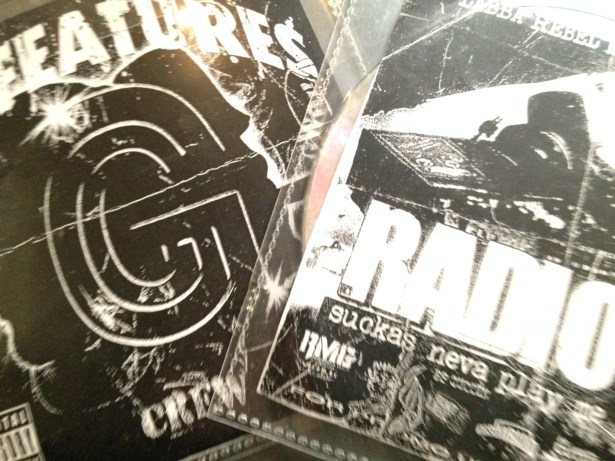
sucka

My son and I were hoofing north through SoHo, basking in the too-hot-but-we’re-not-complaining sunshine in this belated spring, when a guy in dreadlocks swiftly derailed me.

“Mama! Mama!” he said, sidling up beside me and sliding a CD into my hands with a smile. “Do you like reggae? This is reggae.”

Then, in quick, excited, liquid tones that didn’t allow for much in the way of interruption, he explained that:

A) He had just recorded this CD!
B) It was a beautiful CD!
C) Since I like reggae, he really wanted me to have it!
D) But if I wanted, I could choose to pay him for it! Any amount!
E) He’s from Jamaica, Mama!
F) Yes, he’s from Jamaica, Mama!
G) Specifically, Kingston! Had I ever been there?
H) But I should go! Kingston is beautiful! Reggae is beautiful!
I) His friend over here, he made a CD, too, a rap mix-tape!
J) I could have that, too! Yes, Mama!
K) If I gave him $20, he and his friend could split it down the middle, $10 each!
L) But I shouldn’t worry about those smaller bills I was fumbling with!
M) Really, Mama, no need to hand him ANYTHING but that $20! Just look at that $20! That $20 is perfect!
N) Have a wonderful day, Mama! Thank you!

And Mama walked away laughing, two CDs heavier and twenty bucks lighter. God bless you!, I shouted back at the guy.

“Mom,” my actual son said, stuffing the CDs into my backpack, “he played you like a violin. He played you like staccato. You were so played.” He continued in this gently joking instrumental vein a while longer.

I know I know, I said. But I knew I was being played, I enjoyed the way he played me, I was in on it. So that makes it okay. It was masterful. He was brilliant. He was charming. What a salesman. I was wholly aware and entertained.

“But he played you.”

Yeah. But in a way, we were sharing a moment together, I said. For that moment we weren’t strangers.

Like a violin.”

Later, on the train home to Albany, I pulled the CDs out of the backpack and took a closer look at them.

Stripped along the bottom of one was this subtitle: SUCKAS NEVA PLAY ME.

All I could do was laugh.

IMG_0607 (2)

i try

i try
I’ve always been a screw-up. Always always always. And when I say “screw-up” I mean NOT a malicious and narcissistic sower of evil who sets out on a path of Wrongness and pursues it single-mindedly. I mean a well-intentioned doofus (in the worst instances, dumbass) who aims not high but modestly and somehow, much of the time, misses anyway. As a kid I was always running and stumbling. I still am.  I was always forgetting things. I still do. I was always losing shit — my temper, my equilibrium, my #$%@! car keys — that all these decades later I’m still trying to find. And I was always inadvertently baffling and hurting and disappointing people, not from ill intent but all of the stumbling, the forgetting, the losing.

So it goes. I try. I screw up. I TRY. I SCREW UP. And then, just for good measure, I TRY AND SCREW UP SOME MORE.

Over time, two women helped me find peace. One was Mother Teresa, whose observation that God “does not require that we be successful — only that we be faithful” struck me as some kind of radically liberating bombshell. The other was my own Mother Jeanne. “Did you do your best?” Mama’d ask whenever I tried and failed, often when I was caked in mucous during the aftermath. That’s all she ever asked of me. That’s all that ever mattered to her. The trying.

Mama was a violinist, and, like every working musician who ever lived, she gave private lessons to a rotating assortment of students young and old. One day, on a trip to the grocery store, she also gave them buttons. I don’t remember what prompted this shopping expedition to downtown New Preston, Conn., though she was probably ferrying them to or from a recital and had routed us all into Zinick’s for a treat. For whatever reason, there we were, a few of her younger students and I, when Mama spied a basket full of little round pins with positive messages by the cash register. This was the 70s, and smiley faces were everywhere.

Mama combed through the basket and plucked out buttons for her students. I only remember one of them. It said I TRY in big white letters against a black background, and she handed it to the kid who possessed the worst tin ear in the history of Mama’s music lessons, possibly of all time. He accepted it with a smile.

I have no idea whether he went home later and wept into his “$6 Million Man” pillowcase, but for me, at least, it was a memorable and positive lesson. She hadn’t handed him a button that said NUMBER ONE, or YAY FOR ME, or I RULE AND THE REST OF YOU SUCK, HA HA HA. She wasn’t telling him he was a Jascha Heifetz mini-me waiting to happen. She was affirming his effort. She was acknowledging he’d done his best. And that’s not nothing; in fact, it’s just about everything. In this success-obsessed society, it takes courage to hit the wrong notes and keep playing. It takes faith to fall flat and get up. But there’s no other way to keep moving.

So I try. I screw up. That’s life. Amen. And to hell with the car keys, anyway.

death, laughter and sufjan stevens

sufjan

Are you familiar with the music of Sufjan Stevens? No? Well, let me tell you something: It is beautiful and strange, deeply spiritual and just as deeply morbid. And I love it. But then, I love ALL that fun stuff. Beauty! Strangeness! Spirituality! Morbidity! Aren’t those the four classical elements? Forget fire-water-air-earth, which always struck me as insufficient, anyway. There was never any mention of chocolate.

But back to Sufjan. My kind of boy. He played the Palace on Wednesday night, cranking through the entirety of his latest album — “Carrie & Lowell,” a tribute to his late mother — plus a sampling of older music. Lots of grief and death. Lots of weird, airy poetry. All of it was beautiful, strange, spiritual and morbid, performed with a mesmerizing light show against a backdrop of projections on tall, pointed screens resembling the stained-glass windows of a cathedral.

It felt like church, only more so. People actually talk in church. For the first 45 minutes of Stevens’ performance, no one said a word. Including Stevens.

Finally, he spoke: “Thank you.” And then, for the next 10 minutes, he unleashed an exquisitely calm Soliloquy of Death itemizing his every childhood memory of a deceased person, animal or plant since age 7. He began with his 97-year-old great-grandmother — dolled up in her coffin like a “homecoming queen” with an odd, matronly air about her — and went on to include a terminally ill cactus, a rat with tumors and an aunt who died of a broken heart. It was bizarre. It was brilliant. It went on forever. At some point during this deadpan (what else would it be) litany of the dead, I started laughing uncontrollably and just couldn’t stop. I wasn’t the only one, but I was probably the loudest.

I think I may have offended the people sitting in front of me. If so, I would like to issue an apology.  Also, an explanation: When it’s not reducing me to cataracts of saline, death cracks me the fart up. Laughing at death is my way of coping with its omnipotence, its omnipresence, its ruthless unpredictability; it’s like some viciously fickle feudal lord holding sway over the bumpkins. I hate that it strikes without warning or pity. I hate that it can’t be swayed. It’s tried hard and repeatedly to ruin my life, and it’s come close. But it didn’t. It couldn’t. I wouldn’t let it. That’s the only control I have over its power: to keep living, and laughing, in spite of it.

Losing someone you love is no funny business.  No ha-ha’s anywhere in the moment that doorbell rings. Yet the absurdity of everything that follows — from the dolled-up weirdness of the embalming to all those surreal exchanges with the funeral people, the money people, the government people, the lawyer people, the people people — puts a darkly comic spin on the aftermath. Sooner rather than later, you start laughing at it all because you have no choice. And then you just keep laughing. Because, really, what the hell! Death doesn’t go away, and neither does the comedy surrounding it. May as well laugh at the damn thing.

So, yeah, I guess I guffawed a little too loudly for the prayerful atmosphere of a Sufjan concert. But I suspect Stevens himself would understand, given his familiarity with the topic and his quiet insistence in talking about it. As he observes incontestably on one of his latest songs, “We’re all gonna die.” Sure are.

So maybe, on some level, he’s laughing, too. Beautifully. Strangely. Spiritually.

the gardener

IMG_0486
I am not a gardener. My mother was. My husband was. Both of them tried to convert me with noble attempts at prestidigitation that aimed to turn my black thumb green, but they never worked. Rest assured, I love flora of all varieties. I enjoy being in their company, basking in all their delicate and aromatic glory. But I’ve always had a certain way with plants: I kill them.

When I was a kid, Mama gave me pretty little impatiens in a pretty little pot. They died. Arriving in college, I received some plant or other (I don’t remember what) as a welcoming gesture on freshman move-in day. It died. My late husband often gave me living things from the vegetable kingdom, but after witnessing several slow deaths under my care, he stopped relying on me to actually keep them alive. He knew that anything requiring air and water for sustenance would need to acquire them from someone besides me, because even when I supplied them in a timely manner, my well-intended ministrations went somehow horribly awry.

Of the 15 or so houseplants Chris tended indoors, I’ve managed to keep eight of them alive. Although I grieve for the seven dead ones, the survivors remain my eight little miracles. Don’t ask me how I’ve done it. I water them now and then. I plead with them not to whither. I blow them kisses and dance the flamenco. At times I’ve been known to engage in human sacrifice just to appease them. Don’t scoff; it works.

Meanwhile, Chris’s gardens — and they’ll always be his gardens — are still out there, still obeying the cycle of life despite my floricidal nature. After he died, some lovely neighbors weeded when they saw the need or planted when they saw a gap. Bless them forever for it, but I knew I had to do something on my own. And so, the first spring after his death, I made a go at weeding and pruning and raking and watering, and I marveled at the way life sprouted from the dirt around me. How’d that happen? What’d I do? Something right? Nah. Must have been the flamenco.

On Sunday, barely a week after the last of the dismal, dirty snow chunks melted away in my front yard, I threw on a pair of shorts and started raking the garden. There, beneath a cover of dead leaves, I spied a spray of crocuses: lavender, hopeful and sweet. It was good to see them again. These graceful wee harbingers of warmth, yellow nosing from their middles, are a perennial reminder of the ephemeral Chris. Each spring, they return — and each spring, I stand there on my tiny patch of lawn, marveling at the beauty and the stubbornness of life, tossing up a whispered “thanks” to my late husband. They’re a gift. So was he.

i found it

mine, all mine!

mine, all mine!

One of our longstanding Easter traditions is the egg hunt. This is true of many families with children. Only problem is, I no longer have children in the sense of having “children,” i.e., beings of great youth, smallness, inexperience and pliability in the face of random parental dictates. I still have children in the sense of having self-ambulatory, independent offspring, two of them recognized by the state as adults, but I no longer have the sort that holds still for diapering.

Anyway. The egg hunt. My youngest is now 14, and I wasn’t sure he’d be up for the usual race around the brown grass and bushes in our back yard, but I didn’t want to disappoint the fellow, either. I wanted to give him the option. So the day before Easter I bought those cheapo plastic eggs and the only remaining seasonal bagged candy left on the shelves, i.e., little malted milk balls and tiny ovoid butterfingers.

Easter day, while I was cooking and cleaning and screaming and flinging cast iron pans around the kitchen, I asked my daughter Jeanne to fill the aforementioned eggs with the aforementioned candy. She’s an adult, so I knew she was capable of this complex task. And not only was she capable, she came back to me about 10 minutes later with a startling innovation: “Mom,” she said, “this year, let’s do an egg hunt for the grown-ups.” She pointed out, and wisely so, that her dutiful teenage brother probably didn’t want to search for eggs while 13 other people watched. “He’s too old for that. So we’ll hide them. You guys can hunt for them,” and by “you guys” she meant all available relatives who fall within the boomer demographic and had not taken part in an actual, valid, run-around-the-lawn Easter-egg hunt for several parched decades of sad paschal deprivation.

When the time came, the grown-ups were beckoned into the back yard, front yard, street and sidewalk, where my clever young progeny had squirreled away shiny plastic vessels in devilishly sneaky hidey-holes. I’ve always been terrible at such things and only found two eggs, both thanks to my son and his theatrically resonant throat-clearing. (“MOM. AHEM. AHEM,” he said, bouncing on the cracked plastic base of a basketball hoop. “MOM! MOM! AHEM! MOOOOM!” At that third AHEM and fourth MOM, I noticed the egg within.)

The candy, once I cracked it open and sampled it, was awful. But the real pleasure lay in watching everyone scatter across the grass and the pavement, peeking under bike helmets, poking noses gingerly in bushes, all of us old farts behaving for all the world like the eager children we once were — and, I guess, still are. My three offspring followed us around, laughing at the spectacle of middle-aged hunters and huntresses in pursuit of precious booty. At the end we clutched our plunder to our chests, grinning. We’d found it. The kids had given us the freedom to be kids again.

tonight at the table

On this blustery Holy Saturday, sun fighting with clouds, warmth fighting with wind, I’m thinking about what a holy human mess I am. How I always was and always will be. And why, 25 years ago, I became Catholic at the Easter Vigil service in a now-shuttered parish in Cambridge, Mass.

I became Catholic not because of the Church, a human structure built on faith but prone to error. I became Catholic because I’m prone to error, too, and because of that, I need the Eucharist. I became Catholic because I believed in God — something I started doing as a kid — and because I believed in Christ — something I started doing a teenager — and because I had come to believe that the Eucharist was the singular, unchanged, inclusive and binding force between Jesus and every messy child of God born before and since.

The Lord’s supper drew me. It’s not that I felt worthy of it; I felt as unworthy as anyone. But I was convinced that the gift of Jesus, by Jesus, at the table with Jesus, was meant to make things right for all of us, whether we choose to pull up a chair or not. “Christ died for the ungodly,” Paul wrote. Also: “In Christ there is no East or West.” Or gay or straight or poor or rich or imprisoned or free or black or brown or white.

How easy to forget this in our passion for pushing away anyone who doesn’t fit our notion of right, normal, acceptable, traditional, perfect. I’m baffled and angered by the behavior and beliefs of Christians who cast others as Other, as though Jesus ever left anyone out. As though any kind of Other wasn’t loved by him. As though any of us is anything but.

I don’t think much about sin, but I know we’re all full of oddities and imperfections, and I’m pretty sure that God made us that way. He’s the omniscient one, right? He knows this about us. He knows we’re odd. I’m also pretty sure we aren’t expected to be perfect, however one might define such a thing. We’re called to try our best, to aim a little higher and love a little better, to offer a hand when someone stumbles and hold on gratefully whenever that someone’s us. This is the body of Christ, the literal and metaphoric corpus at the the table, the grip of love and unity designed to heal us all.

Christ was perfect; that’s enough. We’re not, so he is on our behalf. He represents! God sent us Jesus to handle that end of things, to be faultless because we can’t be, to be the ideal love that shows the way. Jesus came because we’re broken, not because we’re whole. He’ll be there tonight at the table. Twenty-five years later, so will I.
tree sky

no word for what happened in the alps

The news that Germanwings co-pilot Andreas Lubitz might have crashed deliberately into the Alps, killing 150 people, has left officials and everyone else at a loss for words. One in particular: a word that can capture all those deaths and the madness behind them. “Suicide” doesn’t cut it. If Lubitz was driven principally by the urge to kill himself – and just happened to kill everyone else because they happened to be riding on his suicide method of choice – than that’s more than self-murder. That’s a chilling and catastrophic failure of empathy that no one phrase can capture.

Every suicide wreaks collateral damage. Every suicide has victims beyond the one who dies: just ask anyone who’s answered a phone or a doorbell to learn a beloved someone jumped, swallowed, pulled a trigger. One of the mysteries of suicide is the darkness of that final moment, the whys and how-could-they’s of it, the realization that we can never know. Was it some drug they went on or off? Was it crushed romance, lost job, lost sleep, some other trigger that worsened or prompted depression? And how could they do it to everyone they loved? My husband and sister were two of the most caring people I knew. And yet the darkness prevailed, wounding the rest of us as it killed them.

But Lubitz’ final act was something else. Assuming the reports and their implications are accurate, it was more than suicide. It was more than murder-suicide. It was mass-murder-suicide, a slaying of himself and everyone with him in a moment so black that he lost all light and reason — and a sudden plunge downward into lifelong grief for 150 families. If the Latin-derived word “suicide” means a killing of one’s self, what could we possibly call a killing of one’s self and far too many others? A praeterside, or a killing “beyond”? Suieoside, or a killing of “me” and “them”?

I don’t know. I can’t know, because this is beyond meaning: nothing to coin, nothing to parse. No sense anywhere, no way to define it. There is no decent word for it but horror.
darkness

household magic

plunger
Things keep breaking around the house. I want that to stop. I want the light sockets that blew out to start working again without being asked. I want the wet splotchy cluttered basement to stop being wet and splotchy and cluttered on its own. I want the rooms with scratched and stained walls to paint themselves. I want the attic to organize its crap into orderly stacks. I want the dust bunnies to vacuum themselves and the toilets to plunge themselves and the floors and stairs to sweep themselves with an army of magically autonomous mops and brooms (cue “The Sorcerer’s Apprentice”!). I want all this to happen now. Yesterday. Two weeks ago. Last year.

A couple weeks back, on one of the milder Saturdays, my furnace decided to konk out. I didn’t much note its konking, being oblivious by nature. I just layered on fleece after fleece after fleece after fleece, like someone migrating across the Bering Strait, until my highly observant daughter noted that the thermostat was cranked way way way up and yet the temperature inside the house was still, like, 55 degrees. Nothing I did helped. Cranking it down and then up again did not help. Cranking it way way way upper did not help. Re-lighting the pilot did not help.

And so I left a message with the gas guy. When the gas guy called me back, he had some adorably screaming wee ones in the background, and I felt terrible to pull papa away from his babies, especially on a Saturday, but, you know, 55 degrees. He came. I took him into the wet splotchy cluttered basement and dragged a big old bin of Legos out of the way. He then proceeded to fix the furnace in about three minutes flat (fried copper coupling was the culprit), and in that flat three minutes we chatted about his kids. One of them was a 3-year-old boy.

Does your son like Legos? I asked, wiping down the box with a rag.

“Oh! He loves ’em!” said the gas guy, eyes on the furnace. “He has so many!”

Do you think he’d want these?

I popped the lid on the bin and showed him the contents: an explosion of little plastic nuggets of building nirvana. Fun to play with. Hell to step on.

The gas guy looked up. His eyes popped.

“Oh, wow. Yes. Wow. Really?”

Really.

“You sure?”

I’m sure. You’re doing me a favor. Seriously. Look at this place.

“Thank you!” he said, then finished fixing the furnace. I finished wiping down the box o’ Legos. Our jobs done, we talked a bit about payment and a bit about winter and spring and a bit more about kids. And then he picked up his tools, and I picked up the Legos, and we mounted the stairs, leaving the basement behind us. It was wet and splotchy  as ever, but a little (just a little) less cluttered. And it did that on its own. All it needed was a broken furnace and a little boy to make it happen. Magic.


in praise of chit-chat

man, this is one happy phone.

man, this is one happy phone.

The nicest thing happened to me last week. I got a fraud alert on one of my credit cards! Yup! Someone I don’t know apparently used it to buy $174 worth of crap at a Walgreen’s in Manhattan last Wednesday, and I was not there to supervise, OR dole out shopping advice, OR push the cart around the aisles, OR pocket any of the merchandise afterward! It’s true! Guy didn’t even save me a packet of Orbit!

But then the sweetest young man called me to let me know I’d been swindled and assist me in canceling my card. I thanked him. Oh! I’m so glad you caught that! I so appreciate your help! I hope you have a lovely weekend! I said, as though having some nimrod downstate swipe my number was an occasion for neighborly chit-chat. And why shouldn’t it be? If we can be just two everyday people talking for a few minutes, and not Irked Bamboozled Customer and Overworked Underpaid Representative, then that makes the whole exchange just a little less onerous and more, I dunno, normal.

Such phone-bank conversations are otherwise bland and depersonalized, about as chipper and community-building as the social interaction involved with taking a whizz in a public restroom. Less. At least, when you run out of paper and whimper pathetically, there’s that miracle of actual, meaningful human contact when an anonymous hand reaches under the stall to pass you a bunch. This simple action gives me faith in humanity! It does! I am not exaggerating! YOU KNOW WHAT I MEAN!

Anyhow. So I was on the phone with this sweet young man (and while we’re on the subject, my daughters are giving me grief for calling every male under the age of 40 a sweet young man, as though I have somehow lately morphed into kindly-old-biddy-dom and must peer at the Youth of Today over my cat’s-eye glasses while sucking on a tube of Dentu Creme). At the end of our friendly, fraud-related chit-chat he gave me a number to call to order a new card during the week, and I called it, and so I found myself chatting with the sweetest young woman a few days ago. She had a subcontinental accent, which of course meant yet more chit-chat when she asked if there was “anything else” she could help me with, which of course I took as an invitation to inquire about about her location.

India, it turned out. I forgot to ask which city. (HOW many years have I worked as a journalist?). But I remembered to ask her about the weather, and the dear sweet thing went on and on about typical Indian weather patterns this time of year, which apparently amount to: Some days are chilly enough to require sweater-wearing, but most days aren’t. Most days are mild enough to go outside in shirtsleeves. “But not today,” she explained. “Today the weather isn’t very good. I had to wear a sweater!”

She laughed. I laughed, too. I would love to be able to walk outside in only a sweater, I said. We’re still bundling up in parkas here in Albany! And then I laughed again! Ha ha ha! And then she laughed again! Ha ha ha! Still laughing, we said goodbye and wished each other a lovely evening. I hope she had one. I know I did, ending the day neither Irked nor Bamboozled, not even caring about the Orbit.