not what you think

not a walk in the park

not a walk in the park

Life isn’t what you imagined it would be when you were in your 20s.

You know what I mean? I mean it isn’t some walk in the park. When you’re 21, barely at the post-pimple stage of development, graduating college and brimming with youthful gumption, you look ahead to the next one or five years to a job or traveling or grad school or the Peace Corps. And then you look beyond that and see independence and an apartment and a commute to a work, Starbucks in hand, on the first stage of your directly rocketing arc to career success.

And then you look ahead even further and see love and marriage and a tidy house and a gurgling baby and a bigger job. And then you look ahead and see more gurgling babies and older adorable children and an even bigger job and then, down the line, you envision turning a little gray with your spouse. And then you look ahead and see you and your by-then-silver-fox life-mate schlepping your kids to college, and then you look ahead again and you imagine them graduating college, holy shit, just like you, barely post-pimple and full of youthful gumption, crossing the stage to rousing toots of mediocre Elgar, clutching diplomas in their hands and long, linear, productive, predictable, mistily imagined and neatly cinematic lives occupying their noggins.

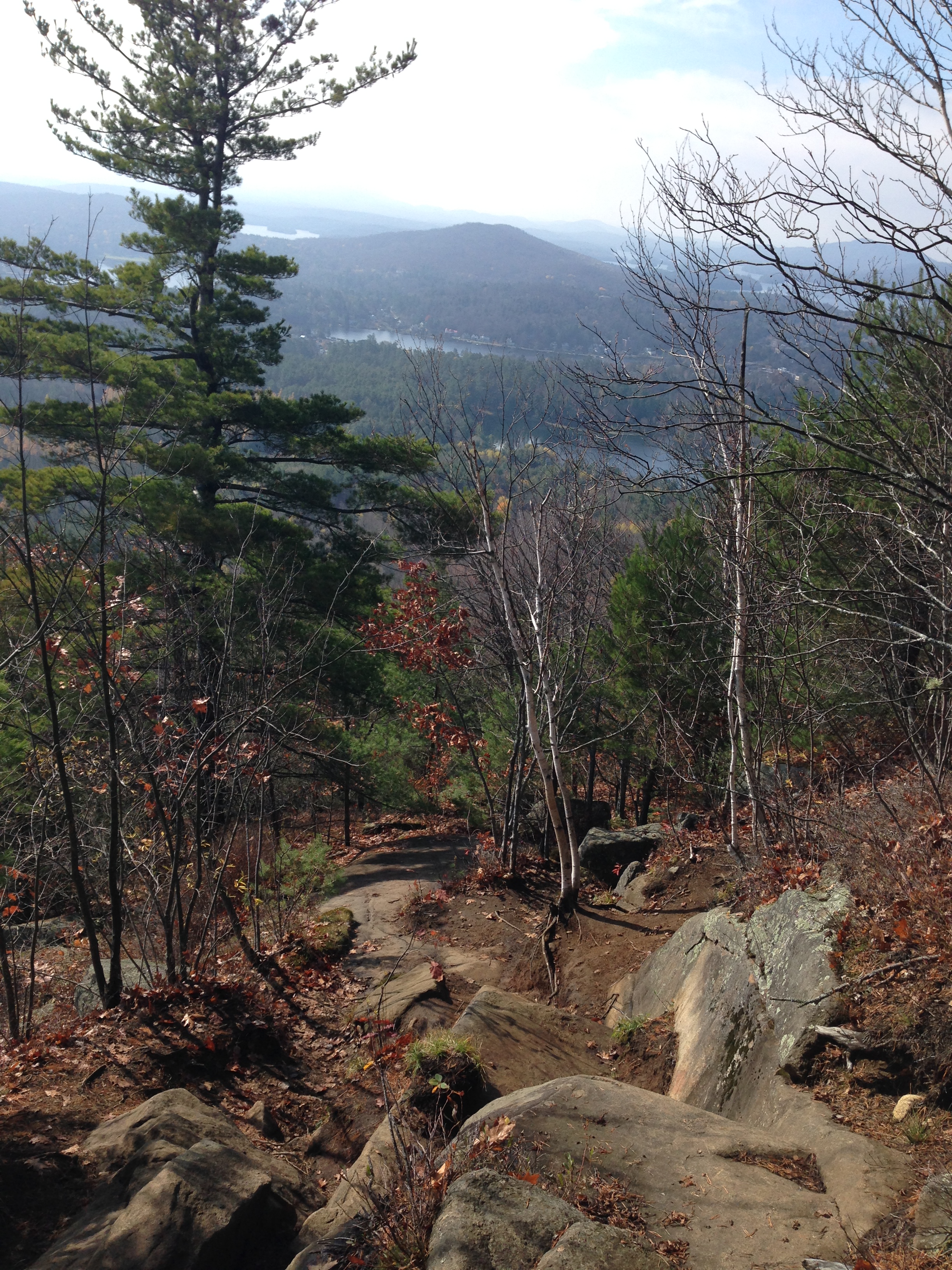
But life isn’t like that. It’s not linear and cinematic; it’s a dadaist mess, marked by pain and complication and exhaustion and kinkiness beyond all expectation, and by that I mean not sexually depravity but crookedness, knottiness, twists. The fooking thing never goes in a straight line. The trail is WAY WAY WAY too steep and rocky, gnarled with too many roots and too much dense growth, for a head-on ascent. It’s all switchbacks, stumbles, detours as we make our way through This Bloody Disappointment (we get dizzy, step off the trail) and Those Sucky Losses (stop, dig for tissues, weep) and That Goddamn Illness (we trip, fall down, bleed).

We can’t see all that when we’re 21, and thank God: My trail, so far, has been pocked with grief, and noooooo way would I have wanted to see any of it in advance. Of all the superpowers I might enjoy in some fantasyland comic-verse (flying, for one), I’d never want the gift of prognistication.

This wild path I’m on is also strewn with beauty, and I never saw that coming, either. Though I imagined gurgling babies, I couldn’t have predicted the soul-consuming joys of loving children and the head-exploding awe of watching them grow. Though I imagined falling in love, I couldn’t have predicted the boom-bang-POW! of precipitous passion and the softer, lazier, lovelier conviction that This Guy’s It. I couldn’t have seen all the friends and joys and tiny victories. I couldn’t have seen this blog, for instance, or the book that inspired it; I couldn’t have known that the years following the worst horror I’d ever known, my husband’s suicide, could be so active and fruitful; I couldn’t have anticipated laughter in the strangest settings, light in the darkest, or the way my own sense of self had altered and grown, making me looser, battier, maybe just a little better at being alive. I couldn’t have seen how much I’d have getting older.

No, life isn’t what I expected it would be when I was in my 20s. It’s scarier. Crazier. More mystifying. Harder on the joints. More tiring. More beautiful. And better.

small world

i need to start networking, and soon!

Lately I’ve been hearing about more and more coincidences — head-slapping social flukes that have hit me and other folks my age and older. I mean something more than the usual Smalbany coincidences, which are par for the course in these chummy northern climes; this isn’t just a matter of realizing you and/or your favorite babysitter and/or your cat went to St. Catholics of Catholicism Catholic School with your priest’s uncle’s neighbor’s dentist’s ferret. No. This isn’t that.

I’m talking about geographically wacko coincidences, as in: Hey! That Starbucks barista you met on your visit to the Bering Strait last summer is actually your boyfriend’s ex-girlfriend’s college roommate! Wow! Although, to be honest, I have no idea whether there’s a Starbucks on the Bering Strait, so don’t blame me if you plan your trip over the land bridge and can’t find a Pumpkin Spice Latte. I am merely indulging in poetic license, here.

The point being, this sort of thing happens to me all the time now. I find myself meeting someone new, in some faraway place, and then realizing the two of us share some overlapping personal or professional connection. And I find myself surprised. But lately I’ve started to regard it as S.O.P. for anyone lucky enough to live a decent length of time and know a decent number of people: If you move through life as something other than a miserable, misanthropic, shit-eating crank, you’re bound to collect friends as you go. And those friends, assuming they, too, are something other than miserable, misanthropic, shit-eating cranks, will collect similar numbers of friends as they go. And some of these friends of friends are bound to be your friends, too.

I simply know more people at age 51 than I did when I was younger. Which makes sense. It would be a little odd if we emerged from the birth canal with an iPhone full of contacts. I don’t know about you, but I started out knowing only the inside of my mother’s womb. When I emerged, I met my father and sister. Eventually I was introduced to my father’s Tia Fondina, and as far as I’m aware, I didn’t mark the occasion by howling: OH MY GOD! I MET YOUR OLD FISHMONGER AT THAT TUBA CONVENTION IN NAPLES!!

If I met her now, I might just. Assuming she were alive. And had a fishmonger who played tuba, and assuming I did, too. But it could happen. Because the world gets smaller as the universe expands: it’s a sweet little paradox of human interaction that sprays this life with the light of the next one. When I picture heaven, and it’s hard not to when so many loved ones reside there, I imagine a place where everyone’s a bud, everyone’s blabby, coincidences are rampant (Hey! I know you! You ran the Italian market in my mother’s bridge partner’s accountant’s parish!) and no boundaries exist between known and unknown, familiar and unfamiliar, friend and stranger. So if I don’t know your ex-girlfriend now, I will then.

the rain before the rainbow

rainbow
This is not going to be long. It’s not going to be profound. It’s not going to contain any original ideas. Indeed, if you squint just a li’l bit through a telescope, you’ll spy clichés. Maybe you won’t even have to squint a li’l bit. Maybe you won’t even need a telescope. My guess is the clichés are there, spy-able as a moon in full shining-pie phase. And you won’t even need to open your eyes to see them.

But what the heck. I love myself a big blobby cornball cliche now and then. And rainbows are beautiful, are they not? I spied THE most beautiful one EVER just north of Keene Valley in the Adirondacks while driving home from a visit with my aunt and uncle. It wasn’t a double, but it didn’t have to be; it was a perfect, single arc of color straight out of central casting. (PRODUCER: Get me a rainbow! Photogenic! Juicy, nice curves on her, but not too fat! LACKEY: Right away, boss!)

I knew it was coming. Tooling along Route 73 through sporadic sheets of wet stuff, I had remarked to my son: It’s raining. The sun is coming out. So, like, there’ll be a rainbow.

And the good lad nodded. He knows prophetic maternal wisdom when he hears it. I’m sure he was awed when, only a few seconds later, we looked left and spied the aforementioned refractive arch hugging a mountain. I pulled over and we tumbled out, oohing and wowing and ahhing. I snapped the obligatory pictures, oohed some more, wowed and ahhed some more, and could barely pull away again for the drive to Albany. Even as we did, it started to fade.

And I wondered, as we noodled our way home from the High Peaks, why rainbows matter so much to us — beyond the obvious facts that they’re pretty, and ephemeral, and suggest a magic span to a brighter place. Judy Garland had something to say about that. Kermit, too. But maybe we’ve been missing the point about rainbows. Maybe they’re less symbols of hope for some gossamer, dreamy, pot o’ gold future than tokens of the present — reminders that Now, for all its pressing duties and complications, has beauty enough to astonish and occupy us, if only we let it.

One other thought hit me as I was driving home, and it’s an even bigger, blobbier, cornballier cliché: No rainbows without rain first! No sirree! But as clichés go it’s a good one, at least for me, because I’m constantly chewing on this particular philosophical pickle of living — the one that INSISTS on darkness yielding to light, death to life, loss to love and drab October showers to kaleidoscopic crescents across a roiling gray sky. They’re not omens of the future. They’re emblems of the present and gifts of a past which, still unfolding, still surprising, doles out beauty.

FATMUPS and the power of the cupcake

A couple months ago, one of my offspring (names have been removed to protect the guilty) confessed to eating too many cupcakes. The exact worry involved nutrition. “Cupcakes aren’t healthy enough. I should be eating healthier,” this person with DNA similar to mine said recently.

After discussing cupcake consumption with Said Descendant, as well as all the other, more nutritious foods being consumed regularly to offset the uptick in baked goods, I issued some brilliant maternal reassurance along the lines of “the cupcakes won’t kill you.” Then, in an effort to clarify this point, I repeated one of my Favorite All-Time Made-Up Principles, or FATMUPs, which amount to my system of rationalizing more or less everything in my life. The FATMUP governing housework, for instance: Sweep the floor when it crunches. The FATMUP governing cars: Buy a new one BEFORE a wheel falls off. (This is a long-held FATMUP of mine. Yup. Learned it from my mama. Yup. Baby-blue 1981 Chrysler K-car. Piece of shit. Yup. Right rear wheel. Clunk. Route 203, New Milford, Connecticut. Just like that. Yup.)

The FATMUP governing cupcakes, and all other forms of gustatory happiness in need of constant and hardcore rationalization, is one of my favorites. Simply put: Some foods have spiritual value. Some foods have nutritional value. Some have both. And some have neither, although these don’t merit FATMUP coverage and I have no idea, really, why such foods exist at all in our earthly realm. (Hello, God? This is Amy. What’s the reason for microwaveable breakfast sausage? Houseflies I can understand. And knee design. But why Jimmy Dean?)

Cupcakes, needless to say, have great spiritual value, containing the banked-up, baked-up, super-amazing power to make us happy, at least until we get high on glucose and then crash in an exhausted, sobbing heap 20 minutes later. Quinoa has great nutritional value, and while I am pro-quinoa, don’t you DARE suggest it has any kind of spiritual value comparable to a cupcake’s, because we both know it doesn’t. Some foods do, however, boast spiritual and nutritional value both: fresh blueberries, for instance. Roasted garlic. Dark chocolate, and don’t you DARE suggest it doesn’t have any kind of nutritional value whatsoever, because we both know it does. (Hello? Antioxidants?)

Which reminds me, I have a FATMUP governing dark chocolate specifically: Eat it while writing. And there’s a corollary: Eat it while not writing. My father owned two sets of pants, one pre-book, one post-book, because he always pounded away at his ding-a-licious manual typewriter with a stack of Hershey’s bars at his elbow. I don’t do manual typewriters. Or stacks of Hershey’s. I do a bar or so every few days, and it’s always the bitter stuff, 60 percent at least. Also, unlike my father, I have no need for two sets of clothes, BECAUSE I’M NEVER NOT EATING CHOCOLATE, SO WHAT WOULD BE THE POINT.

But seriously, folks. We shouldn’t belittle the import and impact of minor joys, because it’s often the minor joys that keep us going. The major joys are awesome: the ecstasy of romance, the miracle of birth, the parental love that fills and fills and fills us. But let us not diminish the power of the cupcake. Small things that bring us pleasure can help us make it to the big ones.

In his recent profile of the philanthropist Heinrich Medicus, my colleague Paul Grondahl wrote my favorite sentence all year: “He credits his happiness and longevity to wine and chocolate.” Go, Heinrich.

Sounds like a FATMUP to live by.

the rule of swedish farmers

“Just be human.”

I love this. It’s my new motto. I want to to put it on a bumper sticker. I want to go viral with it. I want to found a church on it. I want to become obsessed with it, shout it from the rooftops, have dreams about it and mutter it while sleepwalking through the streets of Albany.

A Swedish farmer said it twice in “Healing Homes,” Daniel Mackler’s documentary look at an alternative program in Gothenburg, Sweden, for people with psychosis. It played in Boston over the weekend, and this one line flattened and wowed me.

The folks being treated in this program haven’t responded to traditional methods. In it, they receive intensive psychotherapy (no drugs) and live on farms with compassionate Swedish host families. And guess what. They do better.

Which makes sense. Most of us, no matter the cause and severity of our distress, would do better on farms with compassionate Swedish host families. (Sometimes I think I could use a few saintly Swedes my life.) And all of us always do better heeding their urgent, plainspoken, breathtaking directive: Just be human. Just be present to others. Just love.

I’ve been dwelling on this since coming home from Beantown and Mad In America’s International Film Festival, which unspooled oodles of movies documenting the travails and triumphs of people inside and outside the boundaries of traditional, meds-driven psychiatry. The problems addressed and alternatives floated during the weekend were many, and complicated, and often profoundly hopeful, and I can’t go into all of them now. (If you’re interested, click away at madinamerica.com.)

But the take-away was easy enough — as easy as anything can be when we talk about people in the grip of depression, psychosis and other calamitous ruptures of mental health and happiness. Two basic, powerful lessons emerged. The first, described above, is the Rule of Swedish Farmers. The second is related: Everyone, no matter where anyone’s mind sits on the spectrum of normal to abnormal, ordered to disordered, can benefit from telling their story. Because only in the telling can any of us turn trauma into narrative. Only in the telling can we claim and overcome what brings us pain. Only in the telling can we confide our pain to others and, in that single, simple, astonishing act of trust, be human together.

How viciously hard life can be — for all of us. Thank God we don’t all get clocked with death and disease and disaster simultaneously, because then there’d be no one around to carry us when it’s our turn to limp in pain. I speak as one who was borne by others during the months after my husband’s death. More people were human to me than I can ever thank, or count, and all I can do is pray that I’ll do the same for someone else who needs a lift. Even Jesus needed help with the cross, right? What if Simon of Cyrene had refused? (“Sorry, Lord. My sciatica flared up last night, and I have a corn on my toe.”)

But he didn’t. He was human to the man who was human to everyone. So sometimes we’re the ones in pain, and sometimes we aren’t. When it’s our turn to carry, all we can do is make like a Swedish farmer.

warning: read before reading

fso cover
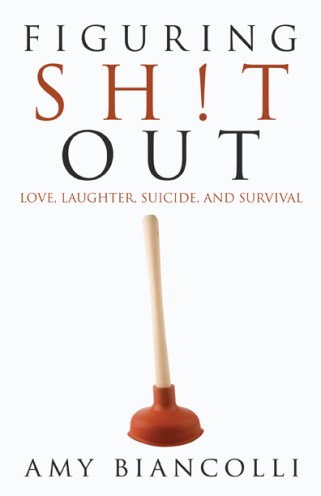
Now that my wacky book has been sort of kind of maybe apparently published (the official pub date is Oct. 21, but I’ve heard reports of its thudding arrival on doorsteps), I want to share a few guidelines for reading it that you should know going in. Some of these guidelines are the same paranoid and obsessive directives I’ve been repeating ad nausinfinitum to friends and family. Others I’m making up right now, pretending as though I’ve put great, brain-crunching thought into them. But all of them are important.

The first guideline: NO ONE HAS TO READ THIS BOOK. I will not take offense if you don’t. If you’re my pal and you don’t read it, you’ll still be my pal. If you’re my dental hygienist and you don’t read it, you’ll still be my dental hygienist. If you know someone who knows someone who knows me and you don’t read it, you’ll still know someone who knows someone who knows me. And if you don’t know me at all? But you’re thinking you ought to read it the way you ought to have a colonoscopy when you turn 50? Well, you ought to go ahead and have a colonoscopy before you read my book. The point being, THERE IS NO OBLIGATION WHATSOEVER TO READ THIS BOOK, BE IT MORAL, SOCIAL OR ENDOSCOPIC.

Second, if you do know me personally and you do choose to read the book, YOU MUST PROMISE TO KEEP TALKING TO ME AFTERWARD. Because, you know, I embarrass the shit out of myself in a couple of chapters. I’ve actually considered drawing up a legally binding contract on this point –- as in, “I, the undersigned, vow to maintain communication with the author of [Figuring Shit Out] even if some of the sentiments and personal revelations contained in [Figuring Shit Out]prompt me to spit and choke violently on my roasted garlic hummus.”

Third, speaking of sudden gag reflexes in response to aforementioned book, YOU ARE ALLOWED TO LAUGH AT MUCH OF THE WEIRDNESS DESCRIBED THEREIN, and you mustn’t feel guilty about it. In a related corollary, IF YOU DON’T LAUGH AT SAID WEIRDNESS, YOU MUSTN’T FEEL GUILTY ABOUT THAT, EITHER. I’m fine with any response to anything anyone reads anywhere in the book; consider yourself now empowered to laugh, weep, roll your eyes, snort in disdain, howl in abject terror or grind your teeth to small, powdery nubs. Seriously. Just so long as YOU PROMISE TO KEEP TALKING TO ME AFTERWARD, we’re good.

Finally, REST ASSURED, AS YOU READ IT, THAT MY KIDS AND I ARE OKAY. In fact, we are more than OKAY. Life is ekshually pretty darned wonderful at the moment. It still has its dips, it still has its turns, it still has those moments when I’m folding laundry in the basement and my tear ducts suddenly discharge saline and my schnozz discharges snot, and soon I’m wearing flowery rubber rainboots and plashing through a flood of my own salty outwash. Three years after my husband’s suicide, it hits me sometimes. But even when it does, I am more than all right. The moment ends. And life is huge. My kids and I are still here, and we’re still loving and laughing, and that’s what counts. I’ll be just fine, SO LONG AS YOU KEEP TALKING TO ME .

please hello good morning thank you

He was 30, maybe – a young man but not that young, with clipped brown hair and neat khaki shorts and an air of stony purpose about him. He was walking east on New Scotland Avenue. I was hoofing west, happy to run a few errands on foot despite the spit of rain on a gray Saturday morning.

As we passed, I eyeballed him just as I eyeball every stranger when I’m walking around the neighborhood: with curiosity. Was he a law student? A young professional freshly arrived? A neighbor who’s lived here forever but keeps to himself?

Hello!, I said, locking eyes with him briefly before he glanced away.

He said nothing.

I studied his blank, cleanly shaven mug, wondering if he’d even heard me. I think he did; I was plenty loud. It’s possible he was preoccupied. It’s possible he’s as prone to spacing out as I am. It’s also possible he’s stone deaf. Or –- I hate to say it, but this has the highest probability — he simply chose to ignore me. Maybe he’s shy. Maybe he’s distraught over something. Maybe his turtle just died. Or his hastas. Or maybe, and again I hate to say it, he’s just not one for friendly bits of badinage with random unknown sidewalk denizens out running errands.

I shrugged it off, because who cares, right? His problem. Plenty of other folks to greet on a stroll down New Scotland. With some I swapped Hellos, with some Good mornings, with others How are you?’s –though I still have my cranky little issues with that last one. (WHY do we ask that question IF WE DON’T EXPECT AN ANSWER?). Most of us, I think, enjoy swapping pleasantries with folks we’ve never seen before and might never ever ever see again, because even these tiniest, most inconsequential and superficial-slash-insincere of social interactions bind us to one another and help us feel connected.

Opposite St. Peter’s Hospital, I passed an older woman at a bus stop in a long black dress. She gave the warmest smile I’d seen all day, her lovely face radiant and caring. I said hello. She said hello back. And for that mighty micro-moment of miraculous human synergy, we mattered to each other, related to each other, made the world a warmer place.

About 10 minutes later, with most of my errands finished, I started hoofing back east along New Scotland. I passed that same woman at the same bus stop. She gave me the same warm smile. We felt the same fleeting jazz of connectedness. And on my right, I saw him: a big guy standing on the curb, his stance wide, his round face fleshy and welcoming.

He grinned at me.

“PLEASE have a good day,” he implored, flinging out his big arms to embrace the drizzle or the moment or (if I’d been any closer) me.

And you too, I said.

“Thank you!” he replied. And I knew he meant it, just as I knew he meant the please -– beseeching me politely to have a good day as though it mattered to him. As though, if I didn’t have a good day, it might somehow ruin his.

I had one. I hope he did to, too. And the woman who smiled. And the man who didn’t? Maybe, if I see him tomorrow, he’ll say hi back.

not at all scared

i agree, bill wants her to run

but they didn’t even mention obama

On my lunchtime constitutional today, the non-scariest thing happened: four birds of prey circled over my head. I repeat, this was a non-scary event. Totally. Yup. Because I’m not superstitious, and I DID NOT REGARD THIS AS AN OMEN OF DEATH, even though this particular avian foursome resembled vultures looking for carrion. And I was the closest thing nearby that remotely qualified. And they were eyeballing me hungrily, I could just tell. And as they were eyeballing me hungrily, I heard one of them rasp to the other, “What do you think, bro? Too old and stringy? Metallic aftertaste?”

Still, even as I heard this, I DID NOT FREAK OUT. I just squinted mightily and eyeballed them right back, although I’d just eaten yogurt and a banana back at my desk and wasn’t all that hungry, so I doubt I looked convincing. Probably the mighty squinting and faux-ravenous eyeballing just made me look older and stringier and thus less appetizing, because the four of them soon lost interest and landed on the peaked roof of a nearby church, where they then cooled their heels (do they have heels?) while discussing politics (do they have politics?).

BIRD ONE: What do you think? Is Hillary running?
BIRD TWO: Get a real question.
BIRD THREE: Dudes, look. That weirdo white-haired lady. She’s still there.
BIRD FOUR: I still say she looks a little fibrous.

They didn’t stay long. I expect they ran out of things to say to each other, or they lost interest in me, or they wanted to check out that new Japanese restaurant on Wolf Road. But they soon flapped off, leaving me with my pathetic squint and my craned neck and my TOTALLY NON-SUPERSTITIOUS NON-FREAKOUT in response to this symbolically loaded quartet of doom soaring above me. I didn’t really take it as a sign. I didn’t really believe I was about to drop dead on the short walk back to work. But yes, OK, I’ll admit it, I was a wee bit spooked. I’m not sure why I was wee bit spooked. Am I afraid of death? Raptors? Steepled church roofs? Speculation on the 2016 presidential campaign? Maybe I’ve seen too many movies, read too much Poe, heard too many yarns around campfires real and imagined. Maybe I’m still a child, and I just want to be scared.

Mostly, I was rapt by the raptors — by their beauty and majesty, by their circling grace and august silhouettes against the lightly tufted late-September sky. What I loved most, in watching them, was what I always love most about Nature: It doesn’t need us. It doesn’t care. It carries on without us, cutting through air and land and water with grace and selfless purpose, and if we’re lucky, we cross paths. In that sense, my lunchtime companions were indeed an omen. A good one.

wait, what?

i wrote this? seriously?

no way. way! no way. way!

Yesterday, a large cardboard box weighing somewhere around eight tons dropped on my porch. It was addressed to me, and so, after hiring a crane to move it into my living room, I opened it. And there they were: Dozens of books with the word “shit” in the title (OH NO, THE COLLAPSE OF CIVILIZATION IS AT HAND) and my name under it. This was a surprise. I was like, I wrote a book? And then I was like, I must have written a book, because I know of no one else named Amy Biancolli in this house. And finally I was like, HOLY BANANAS FLAMBE, which, by the way, I have never eaten, I GUESS I WROTE A BOOK.

This happens to me on a regular basis. Not the book-writing; that’s only occurred three times in my life, unless you count that awful roman-a-dreck that I wrote in my mid-twenties and started to use as scrap paper until I confessed this to William Kennedy, whose response was a shocked and horrified OH NO NO NO AMY, DON’T DO THAT, at which point I stopped. I don’t mean I stopped talking to William Kennedy, who is a very nice man in addition to being a Pulitzer Prize-winning novelist. I mean I stopped using my misbegotten fiction manuscript as scrap and crammed what’s left of it into a drawer somewhere.

No, this is what happens to me on a regular basis: I disconnect from things that I’ve “done” and “accomplished,” perhaps because the whole concept of “doing” and “accomplishing” things is still so foreign to me, even at the age of 51. Especially at the age of 51, at which point any sense of authoring my own life has flown out the proverbial patio doors. You know that epic Talking Heads song, right? “Once in a Lifetime”? The one where David Byrne wobbles his voice ominously: And you may find yourself behind the wheel of a large automobile! . . . And you may ask yourself, Well, how did I get here?

That’s me. Minus the large automobile. (Instead, You may find yourself behind the wheel of a Japanese compact with a janky, taped-on fender!) I often regard the events and blessings of my life as Things That Just Sort of Happened to Me, forgetting, for a moment, that maybe I might have had something to do with making them happen. (Examples 1-3: my children.) Sometimes, looking around my home, I think, HOLY CRAP! I OWN A HOUSE!, and this remains true almost 21 years after living in it. I see my byline in the Times Union and think, HOLY CRAP! I WRITE FOR A NEWSPAPER!, which, given the nature of the industry, is even more surprising now than it was 32 years ago.

This sense of disconnect — this suspicion that I’m not quite the author of my own life, just an actor who responds to outside agents and forces, ducking stinky tomatoes, juggling large feral cats– is even stronger and stranger in the face of tragedy, bringing out the darkly nutcase surrealism of extreme loss. As in: HOLY CRAP! I’M WEARING BLACK AT MY HUSBAND’S FUNERAL! THIS MAKES ME A WIDOW! (There is no more freakishly disembodying revelation, take it from me.)

So the eight tons of booky-wookys that touched down at my house seem to have been written by me, and they seem poised for publication in a few short weeksThe memoir wasn’t my idea, not really. I only wrote it because my friend Bob wouldn’t leave me alone until I did; it’s HIS fault, NOT mine, understand? In a way he’s as much the author as I am. So maybe when he sees it, he’ll howl, in a Byrne-like fit of existential New Wave noodling: Am I right? Am I wrong? …. My God! What have I done!

dead letter office

The weirdest goddamn thing happened to me last week. I mean, weird goddamn things are always happening to me (such as: getting latex-gloved by the TSA), but this was the goddamn weirdest in a while.

An envelope arrived addressed to Chris. That was only a little odd; on a 1-10 scale of goddamn weirdness, it registered somewhere around a 5. I’m used to getting mail addressed to my late husband, but most of it belongs in one of three categories: 1) fundraising queries of the sort that involve adorably personalized labels; 2) letters from old friends who hadn’t yet heard he died, which often bring me to tears; and 3) promotions from car dealerships, which always annoy me (about a 7 on the 1-10 scale of goddamn annoyance) but don’t technically piss me off, except for that one time some smart-ass salesperson hand-wrote and addressed a promotional faux missive to my dead spouse that I mistook for Dead Letter Category No. 2 and, as such, brought me to tears before I realized I’d been had. And so I got pissed off, a 10+ on the relevant scale, and then I tore someone’s voicemail a new one.

The latest Dead Letter to plop on my porch was a bill for $15.16 — what’s left, after insurance, of the charge for an orthopedic office visit and knee X-ray performed in August. This August. On Chris. Who hadn’t visited a doctor of any kind, as far as I was aware, for a whole three years. But there it was, addressed to him, and no one else’s name was anywhere on it.

My first thought was, I kid you not: WTF? Chris is alive?

My second thought was: He had a knee X-ray?

My third thought was: WTF?

My fourth: He has a knee?

My fifth, and I am still kidding you not, was: SO WHY DIDN’T ANYONE TELL ME HE’S NOT DEAD?

Yes. I had these thoughts. No. They make no sense. But I had them. I’m really really serious. Of course, all of them zapped through the Clanging Campbell’s Mushroom Soup Can Known As Amy’s Head in roughly .0000017 seconds, and it wasn’t long after that, maybe another .0000026 seconds, that I collected myself, recognized the temporary breach in my sanity and accepted, again, that my husband leapt to his end in late September, 2011.

Then I sighed, and I thought: Yep. That really happened.

The mind is a piece of work, isn’t it? Mine is, anyway. Mine sometimes noodles along in its own reality, all la-de-dah like, following a path disconnected from the actual world with its actual rules outside my actual Mushroom Soup. It’s possible — and here, reaching wildly for an explanation, I slap right up against pseudo-Freudian psychobabble — that the horror of some traumas, including the suicide of a loved one, is so entirely Other and Wacky and Wrong that our brains never manage to adjust. It’s possible this is true of all loss. It’s possible, in every case, after every death, that some eensy sliver of the ever-rebellious mind simply refuses to go there.

Turned out the X-ray bill, while addressed to Chris, was actually for my daughter. I have no idea how her father got his name on it, as the insurance was mine; it’s possible he brought her there years ago for something else, and his name was etched into the system as the responsible party. I’d forgotten she’d visited the orthopedist for her knee before hoofing off to college this fall. I’d known about it. It just spilled out of the Soup Can somehow.

In any case, that’s one mystery solved. The other mystery, the bigger mystery, the neuro-psycho-spiritual-sci-fi-scenario that momentarily altered my reality and made me think, for just a split hair of a nanosecond, that my husband’s aching joints hadn’t been cremated with the rest of him: that remains a puzzle.