in my america

We’ve been hearing over and over about a Certain Presidential Candidate’s plan to block People of a Certain Faith from entering the country, and we’re all tired of it. If not all of us, most of us, and not necessarily along party lines, either; this doesn’t have much to do any longer with Republican vs. Democrat. This is the Real America vs. the Fake America. And only the Fake America would reject an entire category of people based on their religion.

In the Real America, which I and all those other fed-up people I know actually live in, Muslims get married and have kids that play in Little League. They’re employed at businesses that value them, even cherish them, for their decency, warmth and attention to detail. They teach, advise, struggle, laugh, dream, help patients, slog to work, schlep their children, pray for peace. They do everything we do. They’re everything we are. They’re US. The U.S. This place. Our place. Your land, my land, theirs.

This is what Americans do: Live with each other. Talk to each other. Walk out the door every day into a sea of faces splashed with the colors of every nation, every tradition, every faith. Send our kids to schools filled with a chattering chorus of languages. Remember that our own ancestors once tumbled on these shores with hope and fear, practicing traditions and speaking tongues that classed them as foreign and strange.

This is the Real America. Not the Fake America occupied by billionaire demagogues far removed from the everyday mash of average people leading average lives, pressing up against each other’s differences and realizing we’re not so different. The Real America accepts those differences, deals with them, maybe even loves them — at least the idea of them. The Real America knows that those very differences distinguish us as a nation.

In my America, each of us is judged by our own actions, not lumped and discarded as a group for our beliefs. In my America, love of country means a love of its ideals. It means not hating a large mass of citizens, aspiring citizens and visitors for the color of their skin, the language of their parents or the name they call God in prayer. It means accepting that hundreds of millions of people live in this country, and not all of them look or talk or dress or worship like me. It means not merely freedom of religion, or freedom of speech, but the freedom to picture a better life and citizenry and government and world. We’re dreamers, after all. We drank that Kool-Aid long ago. We’ve never envisioned ourselves as a country that rejects the huddled masses. Or any masses, huddled or not. statue-of-liberty-clipart

Individual bigotry will remain, just as individual minds and hearts will bend toward evil, radicalization, violence. But this America, my America, the real one, the ideal one that lifts flags and hearts: It stays true to the dream. That sounds corny. It is corny. Really corny. I’m really corny. But how else can I be, expressing my love for this colorful, hopeful, noisy goulash of a nation, its airy ideals and beautiful spectrum of people? Despite all of its problems, all of its history, all of the failures in realizing those ideals, I believe in them. It’s a faith we share as Americans — and it has nothing to do with religion.


peace be with us

Recently I wrote about faith and comfort, denying that the former gave me anything of the latter. Instead, I said, faith prompts surrender to the unknown and unknowable, the unseen and unseeable, forcing us to accept that the God we believe in is up to some business far beyond our ken. Loving the One who made us means being at peace with the notion that not much, or anything, really, is within our understanding or control.

But being at peace: that’s not so easy, either. This morning at Mass I was fretting about something, grinding it to a nub, worrying it harder and harder, getting more and more stuck in the grotty sink trap clogging my psyche. Even sitting next to two of my kids, singing hymns about peace, I couldn’t find any. It just wasn’t there. I hadn’t stopped believing in love or God or the daily miracles of living, but I found it hard to find any rest or stillness in them, even sitting there in church.

But then the Mass inched toward communion, and the liturgy arrived at that moment when the priest turns to the faithful and says: “May the peace of the Lord be always with you.” We all responded, as we have since the translation changed a few years back: “And with your spirit.” Then, as always, he exhorted us to offer one another a sign of peace. And we turned and hugged and shook hands with loved ones and strangers alike. Peace be with you.

The Peace always brings me peace. No matter what hard nub I’m rubbing in which dark recesses, it brings me into the light with its flesh-pressing affirmation of divine and human love. This morning, in that moment, all of my worries lifted. How often this happens to me: I walk into Mass weighted and freighted with the burdens of life, only to feel them lifted at the Peace. And how often I dwell on Peace as a gift we bring to one other. It isn’t some remote, avuncular, fuzzy-bearded God floating on cotton balls who gives us Peace. It isn’t the priest, or the promise of cookies after Mass. It’s us. We grace each other with it. We stick out our fists for the hand-off. I give it to you; you give it to me; hey buddy, take it and pass it on.

I’m certain I wasn’t the only person who struggled this morning and needed a blast of peace. We all do. We all have preoccupations, anxieties, quaking fears, thundering grief. Most of the time we sit there, nursing them quietly behind masks of unruffled contentment (or at least acquiescence). Sometimes, with shrinks and priests and friends and confidantes, we confess them out loud. But even without speaking, even without listening, we can help ease someone’s burden. We can bring peace to another with the simplest gesture, the fewest words. Not can; must. We have that power.

This morning, distributing handshakes and quietude with my fellow Catholics, I realized that my faith does bring me comfort. Sometimes it descends in a snatch of music, a bit of prayer, a dimple of light, a stretch of rainbow or a startling coincidence; because I believe in God, I believe that the still, small voice can bring insight and rest in the darkest times and unlikeliest places. But I also believe that God deputizes us to bring peace to each other. Christian and Muslim, atheist and Jew, we’re all assigned to the same task: to live, do our best, love our deepest, get up when we fall, help others when they do and bring a gift of calm to the people around us. Peace be with you.

rainbow


bombings aren’t suicides

The horror in Paris has me thinking again about the failures of that word “suicide.” I first wrote about this back in March, when Germanwings pilot Andreas Lubitz killed himself and 150 other people when he flew a plane into the Alps. I was struck then, and I’m struck now: we need different terminology to describe a mass murder that involves the death of the killer, too.

Whenever I hear of a suicide bombing, I wince. I think: that’s not suicide. That’s not the same sort of action, driven by the same sort of mental state, that caused the deaths of too many loved ones in my life, dear souls who bear no kinship with the murderers in Paris. My husband and sister bore no hate in their hearts for others. They were compassionate, decent and bountifully giving people driven by love, and the pain that caused their suicides was an excess of feeling that could find no outlet short of death. They didn’t mean to extend that pain to others when they died; that wasn’t their intent. They were beyond intent. They were beyond thinking about anything but escape.

What black thoughts felled them had nothing to do with the darkness that infects extremists, who strip themselves of the very human fiber that binds us all. A man or a woman driven by hate who enters a teeming public space and detonates a vest is acting not out of self-loathing, not out of inward pain, but from the loathing of others and the monstrous conviction that outward pain can serve some higher purpose. They blow themselves up not because they feel too much but because they feel too little. They’ve already rid themselves of their humanity. They’ve already annihilated themselves.

And so a suicide bombing isn’t really “suicide” — in Latin, the killing of the self. In such bombings, the human perpetrator is simply collateral damage, a mere ambulatory shell that allows the explosives to reach their intended targets. Call the act for what it is: an auto-detonation, no more than using one’s body as a weapon of mass murder. Suicide has nothing to do with it, because the self has nothing to to do with it. By that point, it’s already dead. Were the self still living, it would stop, cry out in horror and cast the intact vest aside, then fall to the ground and weep with shame.

clouds

under the radar

The other night, I was discussing Albany’s status as a bizzy-buzzy up-and-coming tech hub with someone who lives very far away.

It’s funny, I said. There’s a lot going on around here. But most people don’t think of Albany that way.

“Amy,” he replied, “I hate to break it to you, but most people don’t think of Albany at all.”

I laughed. I had to laugh. Those of us who live here are ALWAYS laughing, because there’s nothing else to do, really. Most people don’t think of Albany at all — unless you reside in tobacco-spitting distance somewhere to the south, in which case you make THE worst possible assumptions about the place (It’s boring! It’s backward! It’s corrupt! It’s an armpit with a charter! People wear clogs!). Otherwise, chances are you’re not lying awake at night sighing, Ahh, fair Albany! I long for thee! It’s just not part of your normal fantasy life. This city is so far under the radar, it’s scraping its butt on the sidewalk — and such a nice butt, too. Historic and Dutch!

But you know what? I’m okay with that. I’m okay with the butt-scraping. I like being ignored. True, an eensy part of me perks up at the thought of Albany being tapped as the Next Brooklyn, at least after Troy gets finished with it, or maybe even the Next Austin Not In Texas. Another possibility is becoming the Next Hudson, which was itself ignored by the cognoscenti until all of sudden everyone downstate collectively went: There’s a post-industrial burgh north of Manhattan with cheap real estate and flea markets? Let’s go! Back in the early 1980s, Hudson was SO thoroughly ignored that a train passing through it almost failed to stop long enough to spit me out — because, as the conductor explained, leaning out the door toward my worried mother on the platform, “No one gets off in Hudson.”

I’ll admit I kind of miss those days. The last time I rode through, the station was so clogged with people getting off and on that it held up the train by a good ten minutes. Hudson’s been discovered! Help, somebody! Help! Help!

I’m not sure I want that for Albany. One of the personality quirks I simultaneously love and hate about the region is its inferiority complex, which reflexively pooh-poohs anything fascinating or singular or old or funky that makes it stand out among similarly sized municipalities. I wish there were more pride of place the way there is, say, in New England, where you can’t set foot without instantly absorbing all of its quaintness as though you’ve been shot up with maple syrup by a white clapboard steeple. New Englanders are mighty proud of their New Englishness, and I can say that because I grew up there. But Albanians? Either we don’t know what we have (that charter, for instance, makes it the oldest armpit in the country) or it doesn’t occur to us to brag about it. And if we bragged more, we could be the Next Berkshires, people!

But maybe what I value most in Albany is exactly that non-braggy quality, the taciturn character and lack of pretension that make living here so easy. All the cool goings-on, all the tech stuff and the arts, all the history and the walkability and mountains that ring us with nature, are that much more enjoyable for being low-stress and accessible. For not being discovered or declared hip by outsiders. For not being the Next Brooklyn. I’d love to see the city and the region keep right on evolving, becoming even techier and artsier and prouder of its history, but may it never lose its unassuming, unhurried, utterly un-hip decency. Being the Next Albany is fine enough.

i shred, therefore I am

My first great achievement this past weekend: moving the piano. YES, PEOPLE. I MOVED THE PIANO. ALL BY MYSELF. I figured that shit out, friends! True, it wasn’t a concert grand or anything, just a snappy Japanese upright. But it was A PIANO. And I MOVED IT. All the way from the back room of the house into the dining room — through three whole doors! That sound you hear is me patting myself on the back while yelping sadly in pain. My muscles aren’t what they used to be. But still. They managed.shreds

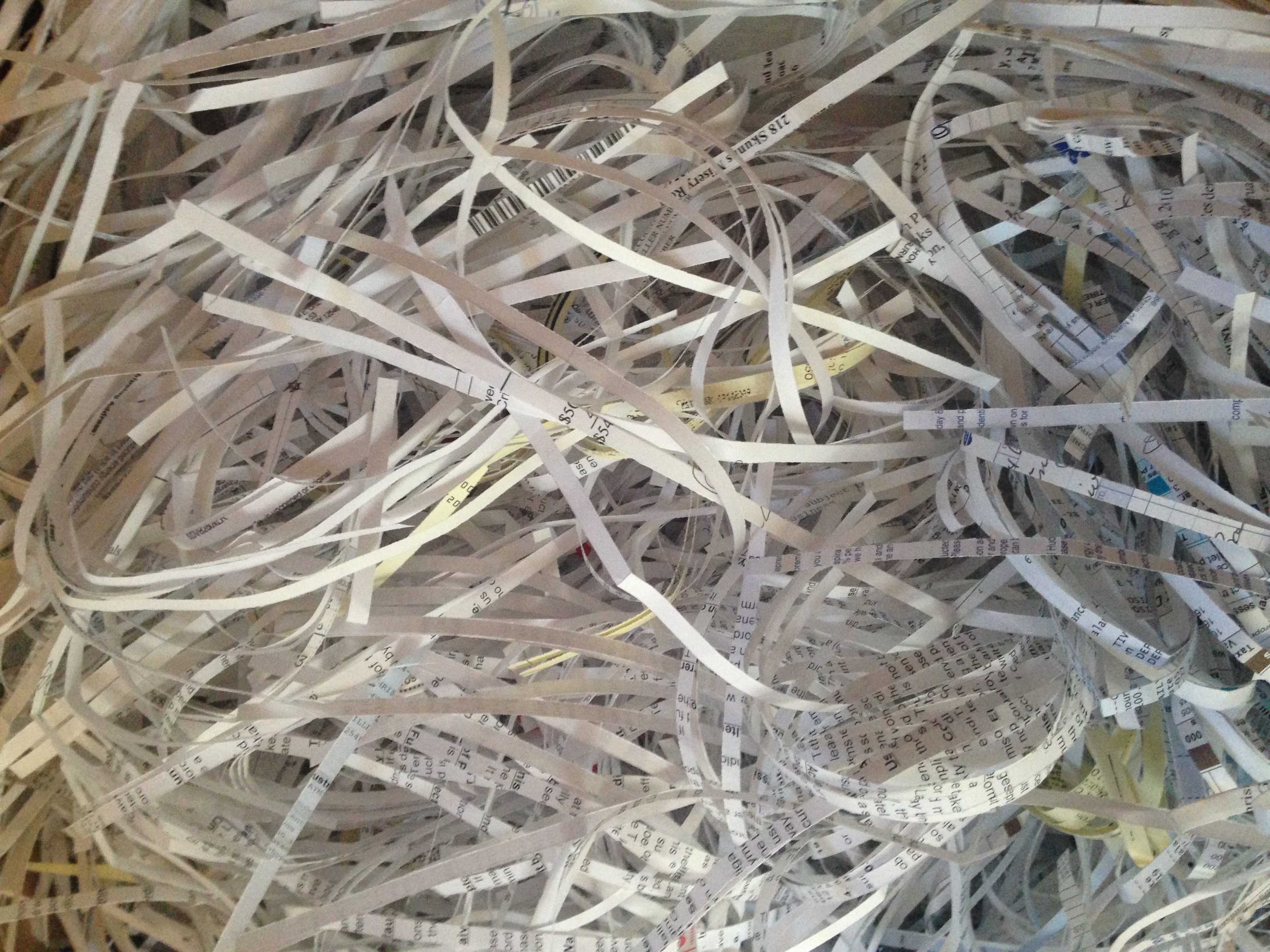
My second great achievement this weekend: shredding the old bills and crap larding up my file cabinets in the aforementioned back room of the house. This I had been avoiding assiduously and, dare I say, passionately in the four years since my husband died.

At first, my logic in avoiding it was: Well, I’ll need those old bills and crap at some point, because Chris just died, and you never know. A year later the logic had morphed to: Well, those old bills and crap can wait, and anyway, Chris just died, and you still never know. Two years later the logic had morphed to: Well, Chris just died, and the old bills and crap are taking up all the room in the file cabinet, but they can wait, and I’ll just put the new bills and crap in crazy stacks and drawers all over the house. Three years later the logic had morphed to: I have no time for this shit, but I’d better buy a shredder, anyway. Finally, four years into it, with the shredder waiting patiently in a box beside the file cabinet, the logic had morphed to: BLOODY HELL! I HAVE NO ROOM LEFT ANYWHERE FOR ALL THE NEW BILLS AND CRAP COMING INTO THE HOUSE! PASS THE SHREDDER!

And so, dear friends, I found myself shredding ALL sorts of nifty-keen utility bills and telephone bills and bank statements and health-insurance receipts and ancient orthodontic reports and flimsy yellow repair records — for cars I no longer own — and similar such ephemera, some of it dating back to the mid-2000s. I shredded and shredded and shredded. I felt like I was cleaning out not just the files but my own psychic space.

And as I did, I found myself in the grip of all sorts of competing emotions: relief that I’d finally gotten around to this onerous, long-delayed task; amazement at the fettuccine-like ribbons of paper amassing in box after box; exhaustion, and a touch of fear, at the thought of ever letting the files get this bad again; sadness at the realization that I was shredding little pieces of my years with Chris, no matter how mundane; hope for the future; and happiness at the room I was making in the files, my house, my life.

With all of these emotions whirring and grinding around (really, they made more noise than the shredder), I began to cry. Just a bit. Not mucus and saline everywhere, just a few easily expunged dribbles. But grief is weird. Even when you know full well that you aren’t over it, that you’ll never be over it, that the whole IDEA of being over it is a total crock, that all you can ever manage is to keep living, keep loving, stay grateful and shred as necessary — even then, it’ll catch you by surprise.

I didn’t know I had it in me to weep over office equipment. But I did know enough to know that pain and hope can co-exist in the same heart at the same time, and that the holy mess of our little human undertakings can lead to a kind of awe. What a shredded tangle I am half the time! And yet I’m still here. That’s not nothing. That, AND I MOVED THE PIANO. ALL BY MYSELF.

and no one got hurt

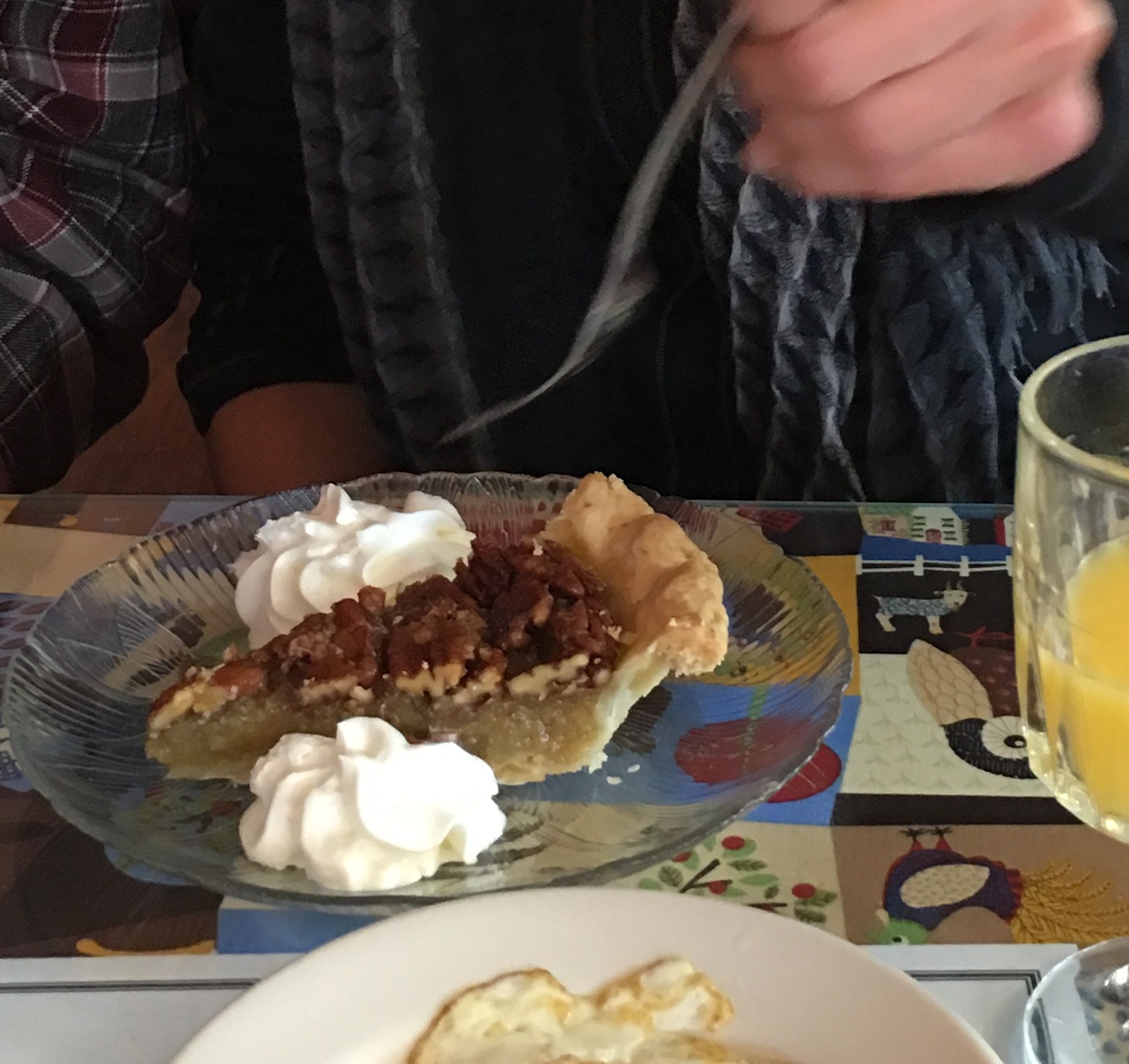
On Sunday, I ate pecan pie for breakfast. Yep. Be impressed.

I almost didn’t do it. I almost stopped myself before I said the words aloud to the waitress, thinking, “But I’m acting like a child. I shouldn’t eat dessert for breakfast — it’s unhealthy,” while also thinking, “But I like eating dessert for breakfast, and I haven’t done that in a really long time,” while also thinking, “But I’m fifty-farting-two years old, and shouldn’t dessert for breakfast be a thing of the past?,” while also thinking, “But doesn’t pecan pie at least have protein in it, for God’s sake? It’s better than a doughnut or even a muffin!,” all while inaudibly screaming, “Childish! Childish! Wrong! Wrong! Wrong!” until I finally, firmly took hold of myself and asked: “What would Mama do?”

Indeed. WWMD.

Mama had a saying. (She had lots of sayings.) It was wise. (She was always wise.)

It was one of a few she would say while I was agonizing over something that probably didn’t merit much in the way of agony, but such was my way, and such was hers to respond with pithy maternal aphorisms. This particularly pithy nugget took the form of a question: “If it gives you pleasure,” she’d ask, “and it doesn’t hurt anyone, what’s the harm?” Of course, “anyone” included myself, which automatically excluded things like binge-drinking while skiing and running with the bulls in Pamplona, but did not exclude things like amassing pointless plastic “Star Trek” doodads and winging a baseball against the house until I’d broken three, count ’em, three first-floor windows.

So the other morning, going out to breakfast with family in Vermont, I was tempted to order something nutritious and grown-uppy, like, I don’t know, some boring-ass fruit parfait or oatmeal with sawdust or farm-fresh free-range quinoa. But my eye fell on the specials for the day, and there it was: MAPLE PECAN PIE. Mmmmmmmmm. Instantly my inner child, the one that amassed all those doodads and broke all those windows, said: I need that! I need that NOW, behbehs! I said some version of this aloud and my family responded, bless their souls: “Do it, Ames! Order pecan pie for breakfast!”

After some discussion, I decided on the pie with an egg on the side, because, well, breakfast. The egg would make it feel legit. When the waitress arrived and took our orders, I waited my turn with some anxiety, girding myself for the worst. Would she scowl with disdain? Choke back phlegm with disgust? Would the other diner patrons point at me and laugh? Would someone call 911, anticipating a cardiac event? Even worse: Would I chicken out and order the dry wheat toast?

But when she turned toward me with her bright eyes and pointy pen, pad at the ready, it all went swimmingly.

I’ll have the maple pecan pie, I confidently declaimed. And an egg. Over medium.

“Okay,” she said, and neither scowled nor choked in the saying. Instead she wrote it down with a smile, adding: “Would you like whipped cream with that?”

God bless her.

Yes, I said, and smiled back. Yes! Pecan pie with whipped cream and an egg! I’ll do it! No fear! Stop my heart and ready the paddles!

It came. I ate it. And it was yummy.

I’m tempted to close with some profound lesson gleaned from my high-caloric breakfast escapade, something more than the tastiness of treats and the foolishness of my fretfulness and Mama’s Enduring Wisdom. I could easily go on about the brevity and capriciousness of life and its aggravating, unpredictable habit of veering suddenly off course or, worse, skidding to a halt. Carpe diem. Eat dessert first. All the usual cliches, baked to sugary perfection. We roll out of bed and head off to breakfast never expecting the day to end before dinner, much less lunch, but it always could, right? Well before dessert. Long before you think of ordering the pie. May as well eat it. WWMD.
pie for breakfast

the queen of dupont circle

The woman was troubled, odd, possibly homeless. She was standing on crutches at a median near DuPont Circle, screaming and crying.

“They won’t open the train! Please! Open the train! Somebody hear me! They won’t open the train!”

I was in D.C. and out for a walk. It was early Sunday morning, and not many people were up and at it. I regarded this woman, somewhere around my age, maybe a little older – mid-50s, maybe? – with her thin blonde hair cinched up in a little-girl bun.

Her voice had a little-girl innocence to it, too. High-pitched and confused. Hoarse and rheumy with spittle. Beseeching.

“Please! Please! Somebody open the train!”

A man strode past. She pleaded with him; he ignored her. She spied another man about half a block up. She pleaded with him; he ignored her, too.

Finally, still crying, she turned her attention to me. “They won’t open the train! I need them to open the train! Please!”

Not having any power over the Washington, D.C., subway system, I smiled and shrugged philosophically.

Well!, I said. I’m sure they’ll open it soon! Ha!

Which, as soon as I said it, I regretted. It was mere lazy, shitty quippery — and an utterly pointless and hollow promise — at the expense of a distraught stranger.

Couldn’t I do any better? Help this woman somehow? Go into the Metro stop, determine whether the trains were, in fact, running? Volunteer to track down a transit worker? Engage her in conversation, ask her where she needed to go, maybe even help her get there? I could have put her in a cab and sent her on her way.

Apparently not. As I said, it was early. I was dumb. And she gave me the reply that I deserved.

“Oh, precious lady!,” she squealed. “Thank you so much! I feel SO! MUCH! BETTER!”

She had nailed me, justifiably so, and in that moment the power relationship between Troubled Odd Possibly Homeless Person and Average Callous Passerby had pulled a 180. I admired the swiftness and fierceness of her sarcasm, the brightness and blueness of her eyes, the exaggerated sweep to her arm — still gripping a crutch — as she gestured expansively in oh-so-faux gratitude.

Without a moment’s hesitation or a hint of doubt, she had asserted her superiority over me. We both knew she was the better one, the sharper wit, the queen to my dunce and the Sunday-morning rambler in unequivocal and splendid control. I might not have helped her open the train, but at least I gave her that.
plunger

talking about guns (and listening)

The debate, if that’s what it is, over gun control and gun massacres and gun rights and guns guns guns rages with little hope of anything like consensus. The Americans who support regulation paint those who oppose it as gun nuts. The Americans who oppose regulation paint those who support it as second-Amendment-rescinding liberal wackos.

In the midst of all this painting, I recall a conversation I had 10 or 11 years ago with a total stranger, a pilot heading home, who sat next to me on a flight to Houston. For some reason, maybe it was my Yankee accent and my squishy nimbus of liberalism, he sensed that I held political and social opinions markedly different from his own. For some other reason, he sensed that I’d be open to discussing these opinions with someone who held opposing views. And so, over the course of about three hours, he drew me out on a variety of subjects — most memorably, gun control.

He said he was a responsible gun owner — and that owning and using this gun responsibly made him safer. I asked him why, exactly. And he told a story of waking one night, alone in his home, to the sound of a break-in. He calmly took his gun. He calmly crept downstairs. He calmly pointed it at the would-be burglar. He calmly told him to leave and then, after the criminal booked into the darkness, he calmly called the police and told them where to apprehend him.

“And they did,” he said. “They arrested him and took him in. And that wouldn’t have happened if I didn’t have a gun. Law-abiding gun owners make our homes and streets safer. The more of us who own guns for the right reasons, the better off we are.” gun-pistol-clipart

I listened to this, grateful for the chance to grasp a point that had always eluded me. I had never understood this bedrock faith, so widely held by gun owners, that the weapon makes them safer — and that the more guns there are in the hands of good guys, the more protected we are from the bad guys. To me guns don’t mean safety; they represent violence, disorder, death. To this decent and well-spoken stranger beside me, guns represented order.

You must be a really rational person, I said.

“I am,” he said.

Really responsible and cool-headed.

“I am,” he said.

You never lose your head with anger. You never pop off impulsively in the moment.

“I don’t,” he said.

Good. You’re obviously the right person to own a gun.

“Thank you.”

But you don’t want me to own a gun. You don’t want me near one. Because I am not always a rational person. I am not always cool-headed in the moment. And I don’t want to kill anyone.

He looked a little startled. I went on:

I’m not saying I’m crazy or criminal; I’m a decent, law-abiding person who struggles at times with anger and impulses. Just the thought of having that power in my hands in an emotional moment terrifies me. I don’t want it. I shouldn’t have it. I support gun control because of people like me, not people like you.

“That had never occurred to me before,” he admitted, then looked at me squarely.

Again I went on:

If what happened to you happened to me? And there was a break-in, and let’s say my kids were in the house, and I’d had a gun? I wouldn’t have been rational about it. I wouldn’t have been able to calmly wave the guy away and then call the police. I might have lost it. I might have killed him.

I stopped and considered the man beside me:  Just as I had never truly understood the perspective of gun owners who say ownership makes them safer, he had never before considered that some people, even upstanding and otherwise reasonable people like the nice lady sitting beside him, might be psychologically ill-equipped.

We had each given each other something in that chat at 30,000 feet: a glimpse of each other’s point of view. We had also given each other a reason, perhaps even a resolve, not to demonize the other. Amid the latest sturm und drang in the wake of the latest shootings, I keep thinking of that sensible, articulate man and the importance of conversation between people who disagree. He wasn’t a gun nut. I wasn’t a liberal wacko. We were just two Americans on a flight to Houston, doing our best to understand.

Why can’t we do that as a country? Why can’t we find some neutral place, all of us — politicians included — and talk about gun violence in a way that engenders listening? Why can’t we swap perspectives and find some middle ground, some shared beliefs that don’t backslide into mockery and cant?

We’re all in this together. For love of our country and our children, we all want the massacres to end: we can agree on that. But how can we end them if we don’t talk? How can we learn if we don’t listen?


young enough to know better

“I just turned 23, and I don’t like it,” the young woman told me. “I really don’t want to be old.”

I blinked at this fresh, lovely thing with her perfect hair and unlined face, so many years away from anything so jarring as a wrinkle.

But but but, I sputtered. But you’re so young. You’ll be young for decades.

“I just wish I weren’t getting older.”

Look, I said. Look. I’m 52, almost 30 years older than you, right? And I can’t let myself feel old, because if I do, then in another 10 years I’ll beat myself up for not enjoying my younger days.

“I don’t know,” she said, clearly skeptical.

You can’t feel old!, I said. It’s a waste of time! See, I look back on my 40s and think, I didn’t realize how young I was! When I was in my 40s I looked back on my 30s and thought, My God! I was a baby!

She still looked skeptical.

Seriously! When I’m in my 60s, I’ll look back on my 50s and think, I was so young! I had no idea!  So if I’m always looking back and realizing how young I was then, whenever then was, then maybe I’m never actually old, right? If I’m always getting older, then that must mean I’m always young. So I may as well enjoy being whatever age I am now. May as well not bother feeling old.

I stopped when she shot me another glance that said mmmmyeeaaahhhh-no-I-don’t-think-so, at which point three realizations smacked me hard. One: SHE THINKS I’M REALLY OLD. Two: WHEN I WAS THAT AGE, I WOULD HAVE THOUGHT I WAS REALLY OLD, TOO. In fact, when I was that age I owned a cane handed to me on graduation from Hamilton, and I remember staring at it and thinking: I’ll never need this. I’ll never be old. NO NO NO NO NO.

IMG_2026Three: I’ll never be old. No no no no no. It hits me often, this disconnect between my chronological age and how I feel inside. Inside I don’t feel 52; I feel around 12, maybe 16 in my more rebellious moments, although I should stress that I’m using “inside” in the non-literal sense and not in any way that suggests that my joints, eyeballs and assorted sagging organs function exactly as they did 40 years ago. That “inside” is in constant, unfortunate flux. But even so, I know that it’s in better shape now than it will be 10 or 20 years hence. So why sweat it? Why fixate on what can’t change (the march of time) and what inexorably does (my age)?

Anyway, I do love getting older, which gives me license to say what I think and not give a mission fig what others say and think in response. I wish I’d had that liberated mindset and unleashed mouth when I was younger, but it took me a few decades to nurture and unfetter them both. And losing my sister Lucy to suicide 23 years ago only made me more grateful to be alive, more determined to laugh and love and pucker and age for the both of us. She can’t. I must.

In the meantime, I may as well embrace the aging process, because it might last a while longer. Maybe a long while longer. Decades. Generations, even. What if I hit 100? Will I look back on my 90s and think, Ya damn fool whippersnapper! You should have enjoyed your youth!

I’d best shut up and listen.

once upon a time

mama and fiddle
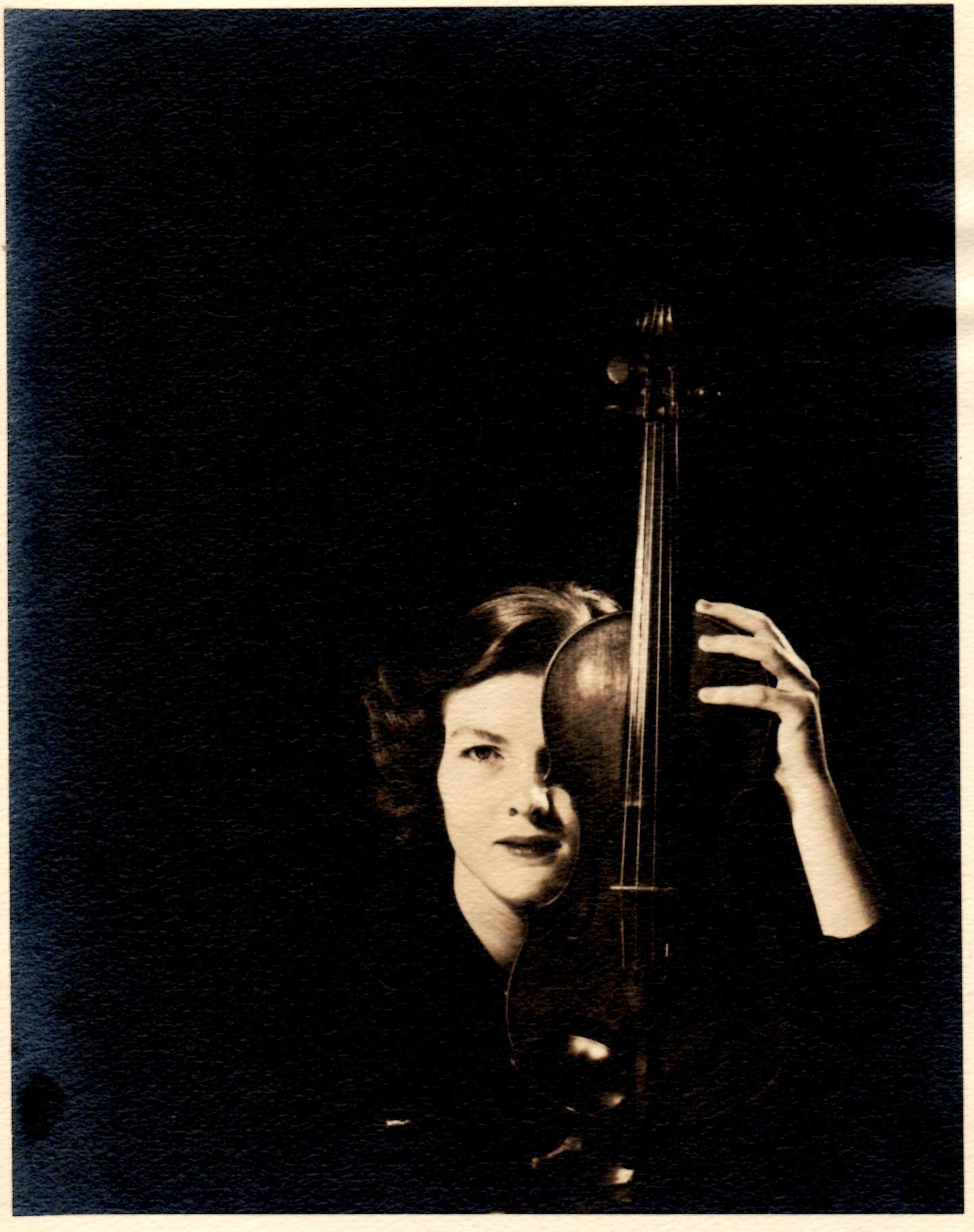
I don’t have much to say tonight (a rarity), but I feel compelled to post this publicity photo of my mother, Jeanne Frances Mitchell. I have no idea when it was taken, who took it, which violin it is and why she’s assuming such an artfully monocular pose. Perhaps the photographer doubled as an opthamologist, and she was taking an eye exam. (HE: “Okay, so put the violin over your left eye, now, and read the fourth line.” SHE: “L . . . F — no wait, P! . . . E. . . “)

Otherwise, I just look at this photo and think: Holy shit, Mama was gorgeous. I mean, I knew this already, I’ve known it my whole life, but I’m reminded of it every time I run across some new-to-me old pic from the distant past. I found this one last night while rummaging through a box of my sister’s papers, which includes family documents and ephemera that I forgot about or, in this case, did not know exist.

Its pleasing aesthetic worth offsets one of the other items I discovered: a terrible, terrible poem that I wrote at God knows what age and that my sister saved for God knows what reason. (Was she planning to blackmail me some day?) She also saved one of the better poems I wrote, a four-page bit of comic verse that I gave to her as a Christmas present one year, so I suppose I should forgive her for saving this sad and smelly piece of caca, too. It’s called “Lost in the Corridors of Forever” (WHAT THE HELL DOES THAT EVEN MEAN?) and it opens thusly:

Once upon a time,
I see, there was and is a place
Where I see myself right now and then
Among the willows, vines and roses,
Searching for tomorrow.

First of all: there is nooooo need for a coma after “see.” Typing that caused me excruciating psychic and physical pain. Secondly: “Once upon a time”? Thirdly: This poem is shit! Shit shit shit shit shit! I don’t care that it’s old enough to classify as juvenilia, and that the handwriting looks all loopy and florid and possibly of junior-high origin; I’m making no excuses. I don’t care how young I was when I wrote it. It’s shit. You know how the name of my blog and related book (obligatory link here) is “Figuring Shit Out”? Well, this here is not worth any sort of figuring at all. This is deserving only of a nice, assertive flush with a melodramatic flourish of the hand.

I’m only going to plague you with one more stanza. But be warned. It’s even worse.

Once upon a time,
I hear the birds whose song has died,
The owls mournful coo, and the wolf
serenading the moon,
Amidst a timeless quest for endings.

I told you it was worse.   This time, typing “owls” without the possessive apostrophe caused me excruciating psychic and physical pain. Typing the WHOLE BIT caused me excruciating psychic and physical pain. And so, instead of doing the logical thing and amy with bracestorching it on a ceremonial bonfire alongside that horrific photo of myself with crooked hair and squinting eyes and a brilliantly ugly polo shirt with horizontal stripes, I’ve instead decided to share the worst bits of this dreadful poesy AND re-post said horrific photo righty-herey in this very public forum. Looking at it now, I’m thinking I was probably around that crooked-hair stage of life when I wrote the damn poem.

Well. I tried. And I grew a bit. With both the hair and the writing. Both are less crooked now.

I close with an apology, because I said up top that I didn’t have much to say tonight — and then I wound up talking about this. So let there be order in the universe. Let us all scroll above and feast our eyes on that beautiful lady that I was blessed to call my mom, and then let’s call it a day before I type out another stanza starts with “Once upon a time. . . ”